
Vacuum Former Comparison | External Vacuum Cleaner, Hybrid Pump, and Single Vacuum Pump
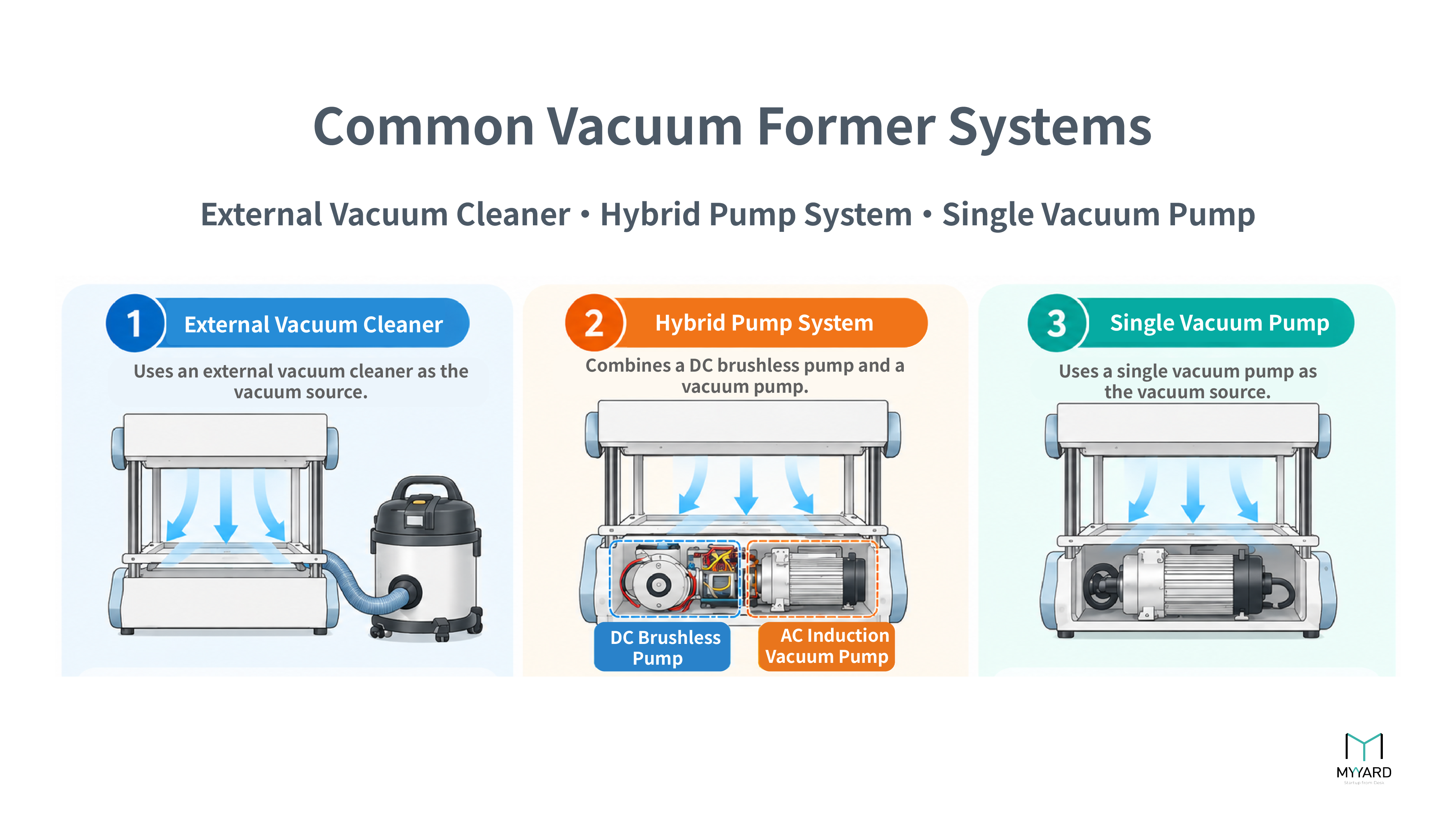
Common vacuum source designs used in vacuum formers can generally be divided into external vacuum cleaners, hybrid pump systems, and single vacuum pumps. These systems differ not only in their maximum vacuum level, but also in their Pressure–Flow Curve characteristics.
Does a vacuum former need an external vacuum cleaner?
Not necessarily. Vacuum formers with a built-in vacuum pump do not require an external vacuum cleaner. Only machines that use an external vacuum cleaner as their vacuum source require one to be connected separately.
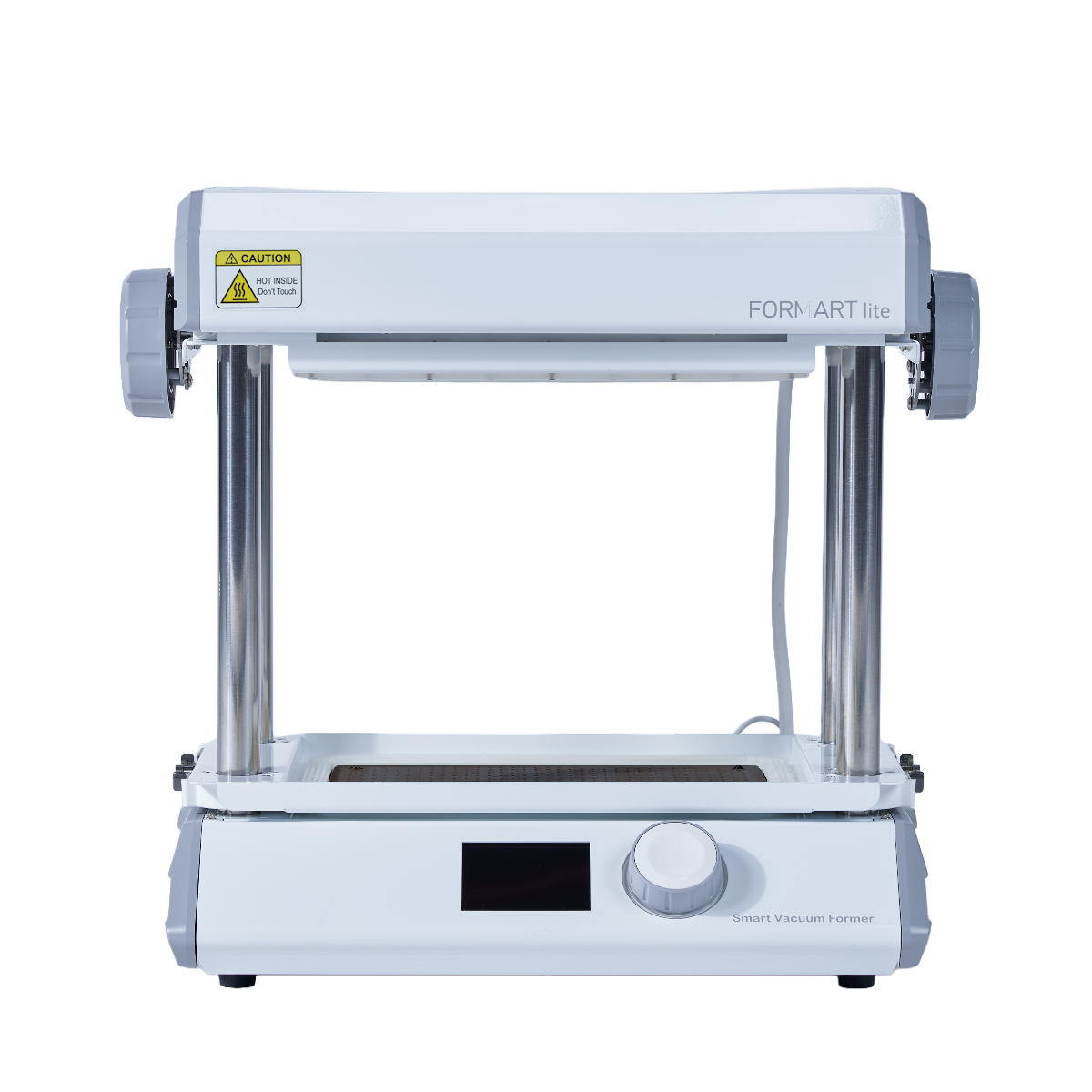
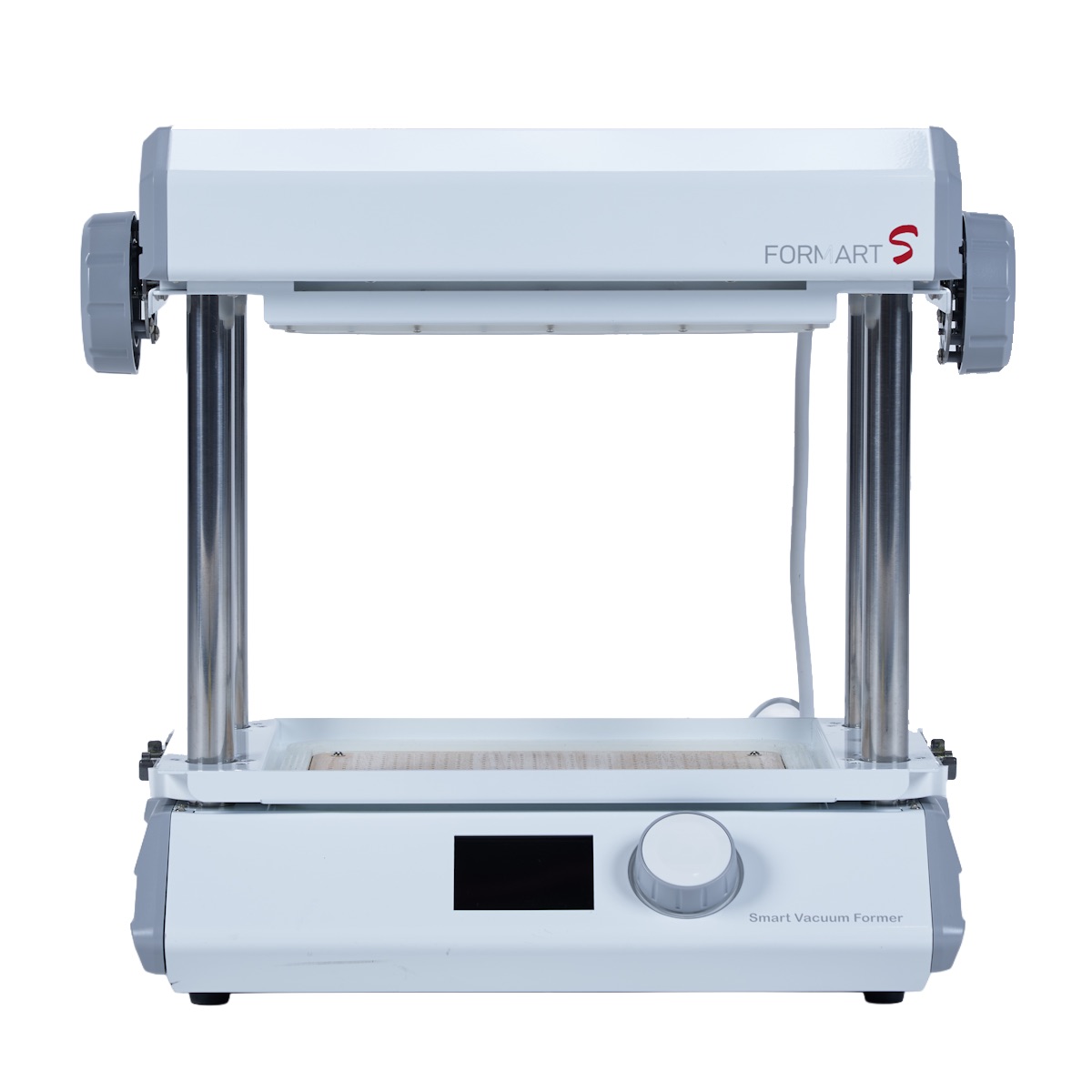
Using MYYARD’s previous vacuum system designs as examples, FORMART Lite used an external vacuum cleaner with a tested vacuum level of approximately -10 to -20 kPa. FORMART S and FORMART 3, on the other hand, integrate the vacuum pump directly into the machine and therefore do not require an external vacuum cleaner.
However, whether or not a vacuum cleaner is required is only the first difference between vacuum source designs. When comparing vacuum formers, it is also important to consider vacuum level, airflow, and the Pressure–Flow Curve, because different vacuum systems build vacuum in different ways.
What are the common vacuum source designs used in vacuum formers?
Vacuum forming uses negative pressure to pull a heated plastic sheet against a mold, making the vacuum source one of the key components of a vacuum former.
Common designs can generally be divided into the following types:
| Vacuum Source Design | MYYARD Example | Vacuum Level | System Design |
|---|---|---|---|
| External Vacuum Cleaner | FORMART Lite | Approx. -10 to -20 kPa | External vacuum cleaner |
| Hybrid Pump System | FORMART 2 | Up to -90 kPa | DC Brushless Pump + AC Induction Vacuum Pump |
| Single Vacuum Pump | FORMART S | Up to -90 kPa | AC Induction Vacuum Pump |
| Single Vacuum Pump | FORMART 3 | Up to -92 kPa | 300W Vacuum Pump |
Looking only at specifications, it is easy to compare the maximum vacuum level of each system.
However, to further compare a hybrid pump system with a single vacuum pump, the maximum kPa value alone is not enough. The complete Pressure–Flow Curve also needs to be considered.
Can an external vacuum cleaner be used for vacuum forming?
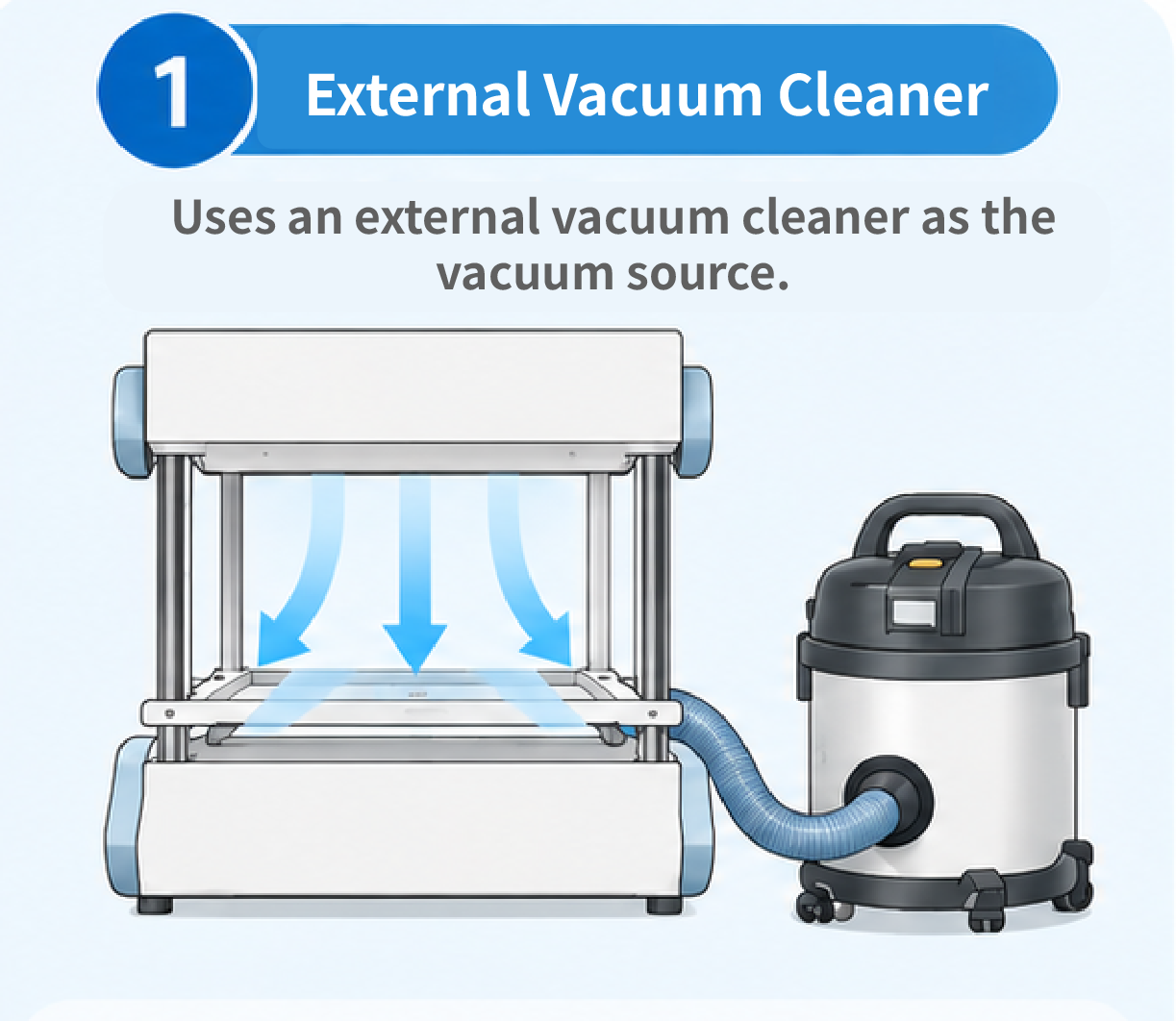
Yes. External vacuum cleaners are used as the vacuum source in some entry-level and DIY vacuum forming machines, and MYYARD’s previous FORMART Lite also used this type of design.
The vacuum cleaner is connected to the vacuum former and provides the negative pressure required during forming.
According to MYYARD’s previous test data, this type of vacuum cleaner typically produced a vacuum level of approximately -10 to -20 kPa.
During actual vacuum forming, we also observed several characteristics of external vacuum cleaner systems:
- Vacuum level of approximately -10 to -20 kPa
- High airflow
- Greater airflow disturbance
- The plastic sheet can cool down quickly
MYYARD therefore changed this vacuum source design in the later FORMART S.
Why did FORMART S switch from an external vacuum cleaner to a built-in vacuum pump?
FORMART S replaced the external vacuum cleaner used by FORMART Lite with a built-in single AC Induction Vacuum Pump, reaching a maximum vacuum level of -90 kPa.
FORMART Lite
- External vacuum cleaner
- Approx. -10 to -20 kPa
➡️
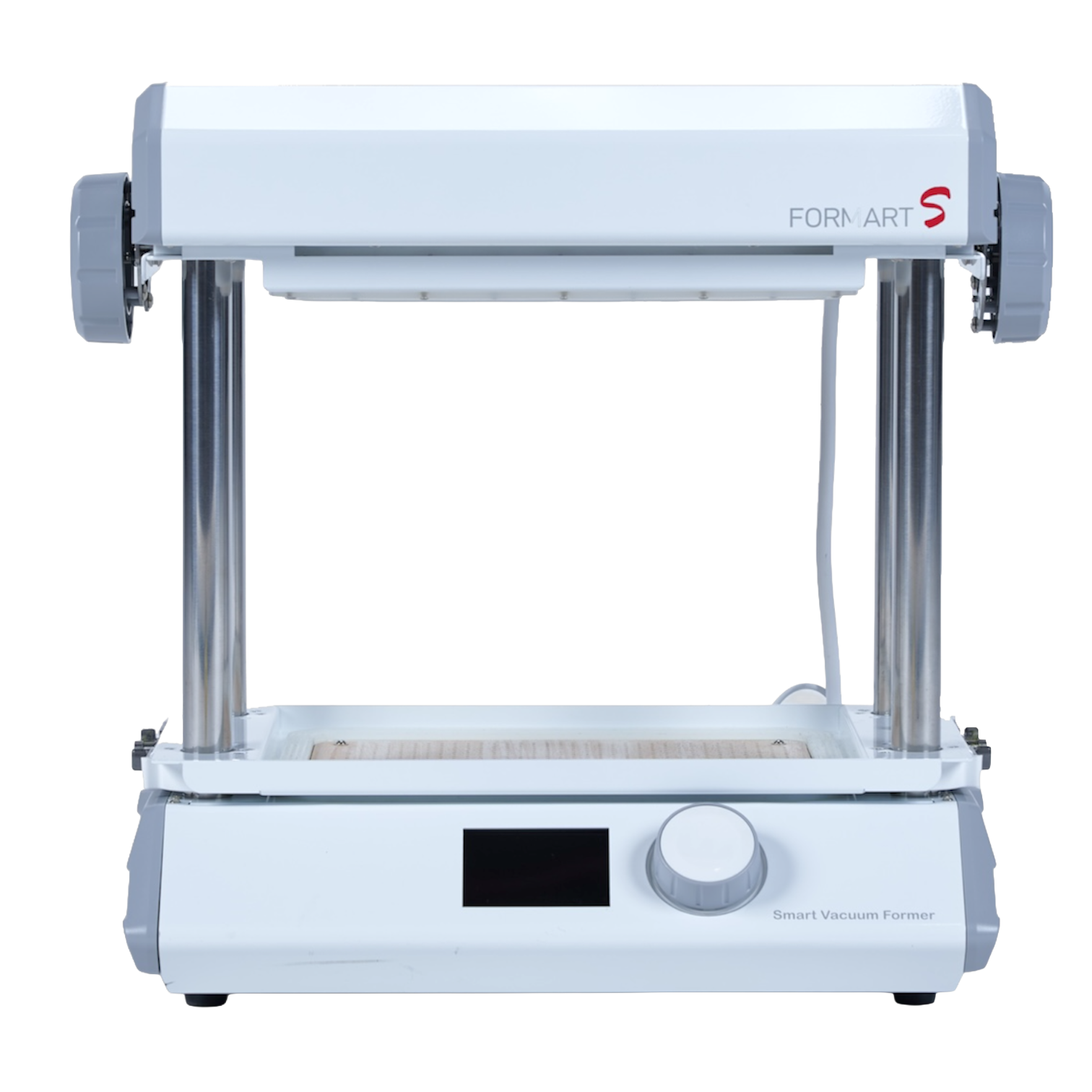
FORMART S
- Built-in single vacuum pump
- Up to -90 kPa
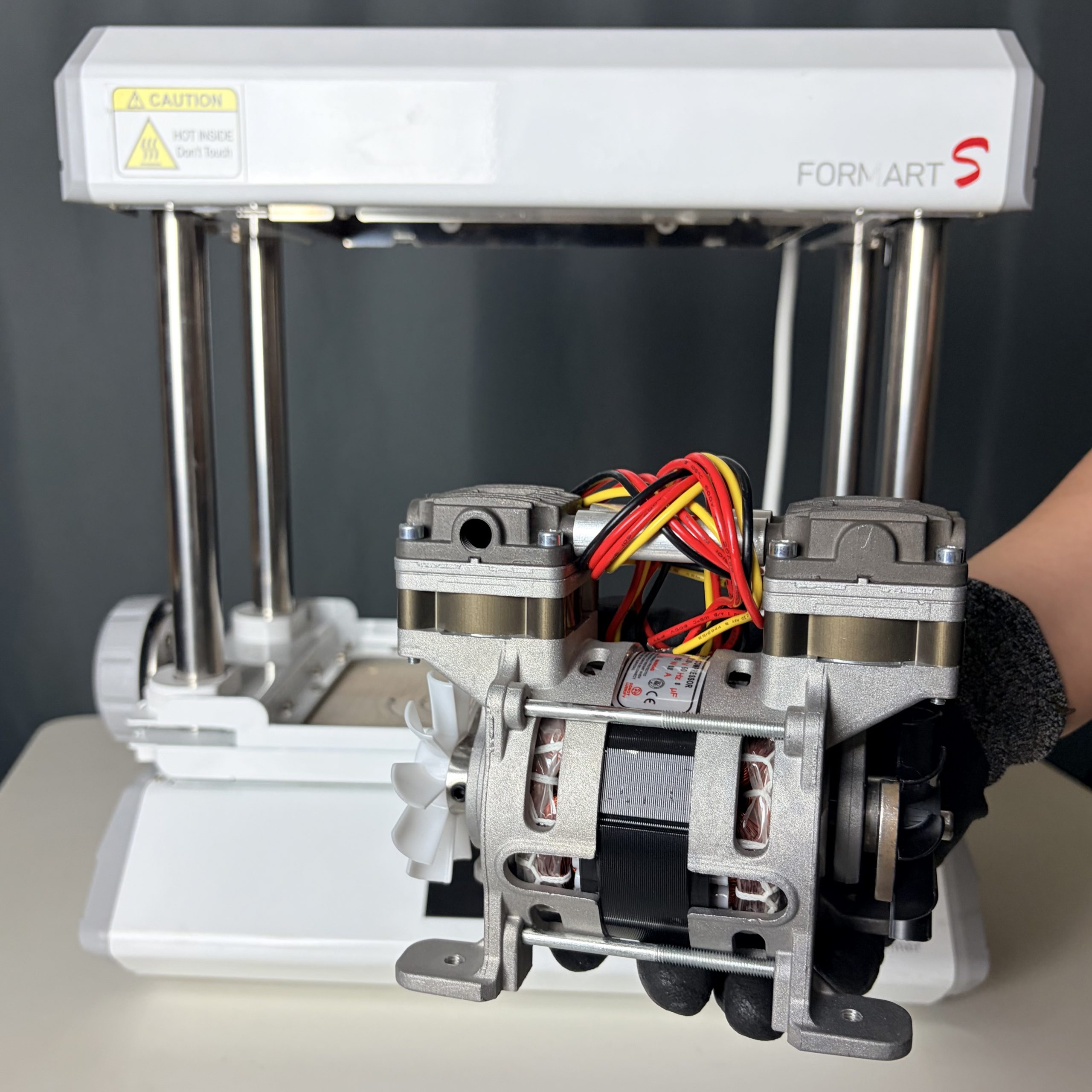
The vacuum source is integrated directly into the machine, so no external vacuum cleaner is required.
This represents one of MYYARD’s product development paths from an external vacuum source to a built-in vacuum pump.
What is a hybrid pump system, and why does FORMART 2 use two pumps?
In addition to single vacuum pumps, another design found in commercially available vacuum formers is the hybrid pump system.
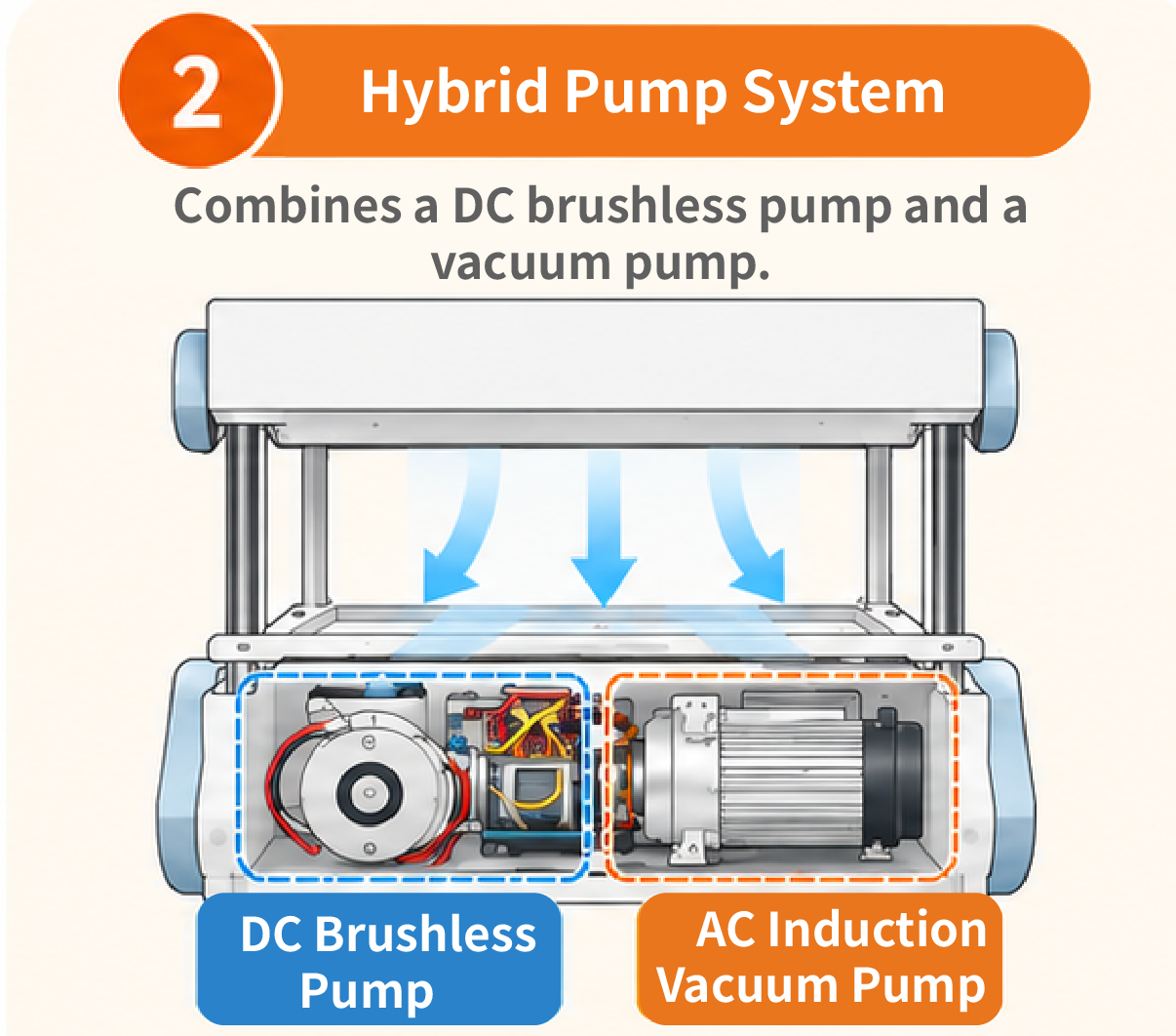
MYYARD’s previous-generation FORMART 2 used:
DC Brushless Pump + AC Induction Vacuum Pump
In other words, a DC brushless pump and an AC induction vacuum pump were integrated into the same machine.
FORMART 2 can reach a maximum vacuum level of -90 kPa and also features a Vacuum Sensor and adjustable vacuum pressure.
If we look only at maximum vacuum level, both FORMART 2 and FORMART S, which uses a single AC Induction Vacuum Pump, can reach -90 kPa.
However, when we later examined the Pressure–Flow Curve of FORMART 2, we found another important difference between the two vacuum system architectures.
What is the difference between a hybrid pump system and a single vacuum pump?
MYYARD’s Pressure–Flow Curve data shows that the hybrid dual-pump system in FORMART 2 has a noticeable dip in the curve, while FORMART 3, which uses a single vacuum pump, follows a single continuous slope.
This is one of the key differences between the vacuum systems used in FORMART 2 and FORMART 3.
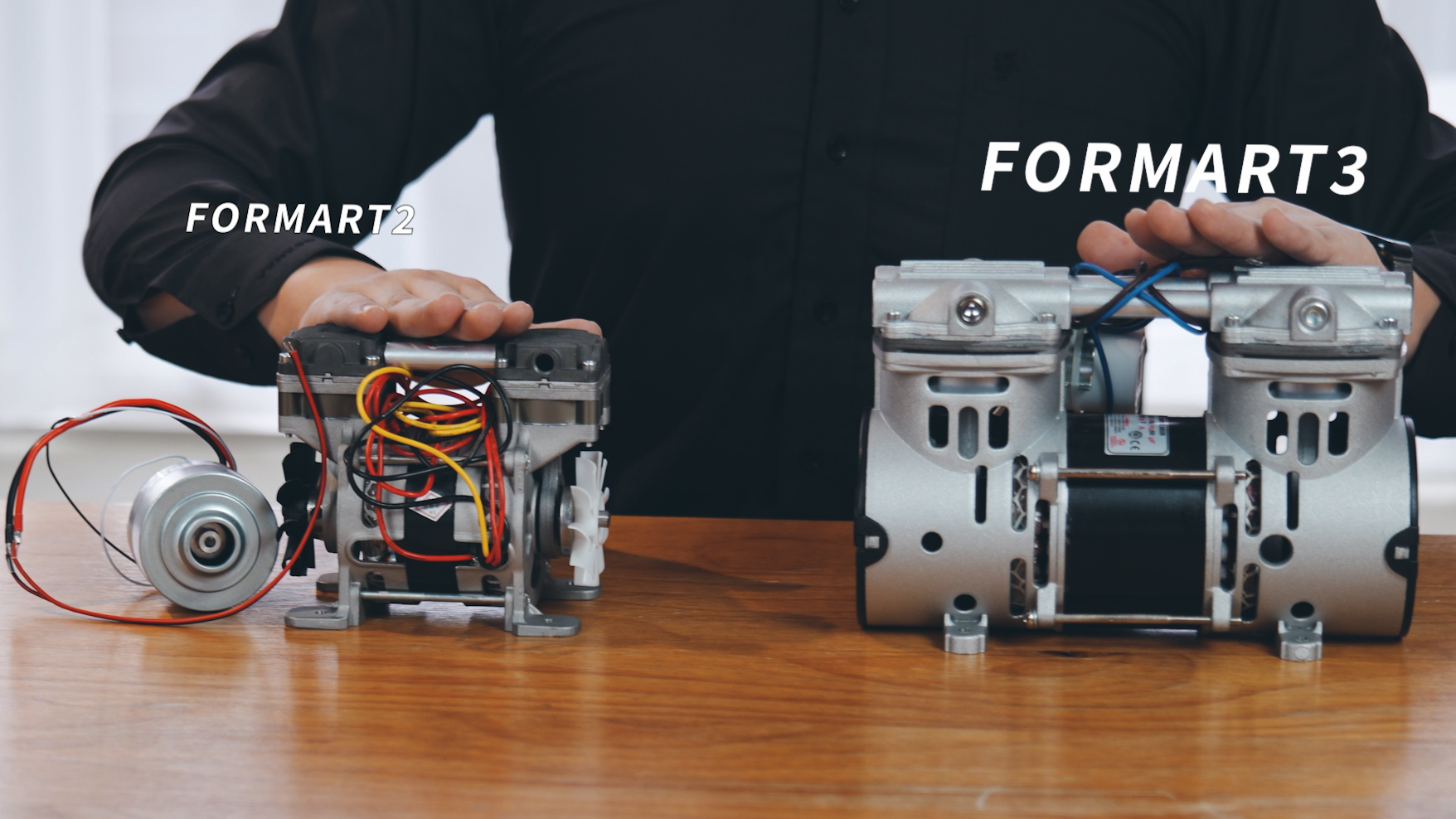
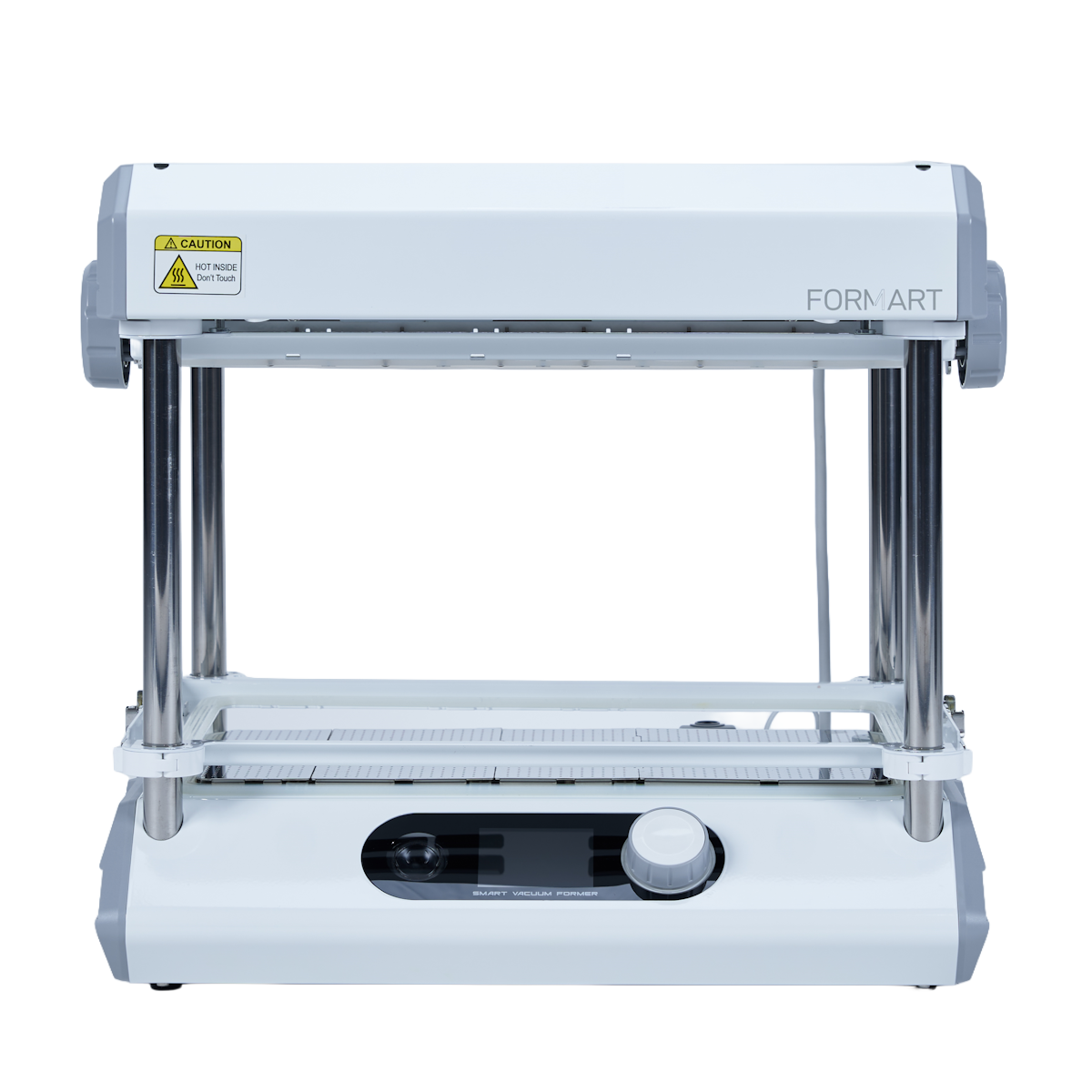
FORMART 2
Hybrid Dual-Pump System
- DC Brushless Pump + AC Induction Vacuum Pump
- Initial airflow > 200 L/min
- Maximum vacuum: -90 kPa
- Noticeable dip in the Pressure–Flow Curve
➡️
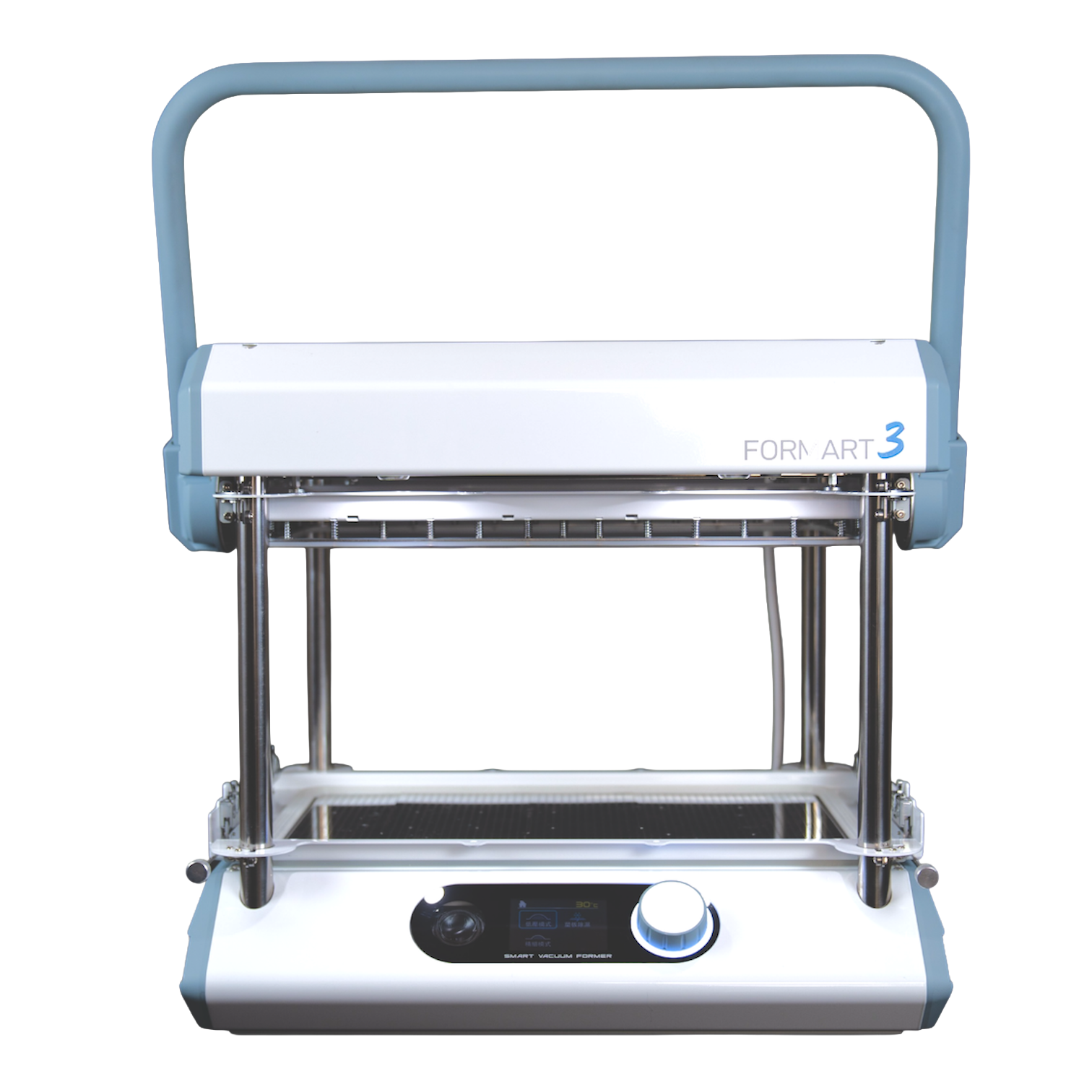
FORMART 3
Single Vacuum Pump
- Single 300W vacuum pump
- Initial airflow approx. 110 L/min
- Maximum vacuum: -92 kPa
- Pressure–Flow Curve follows a single continuous slope
Vacuum forming is not only about maximum vacuum level
At the beginning of the forming process, the plastic sheet is still hot and highly formable. As air is removed, the sheet contacts the mold, and heat continues to dissipate, the sheet temperature gradually drops. This means the effective forming window is limited.
FORMART 2 uses a hybrid dual-pump system. At the beginning of the process, it uses higher airflow to remove air quickly, then moves into a lower-flow, higher-vacuum operating range. The Pressure–Flow Curve shows a clear change in slope between these two operating regions.
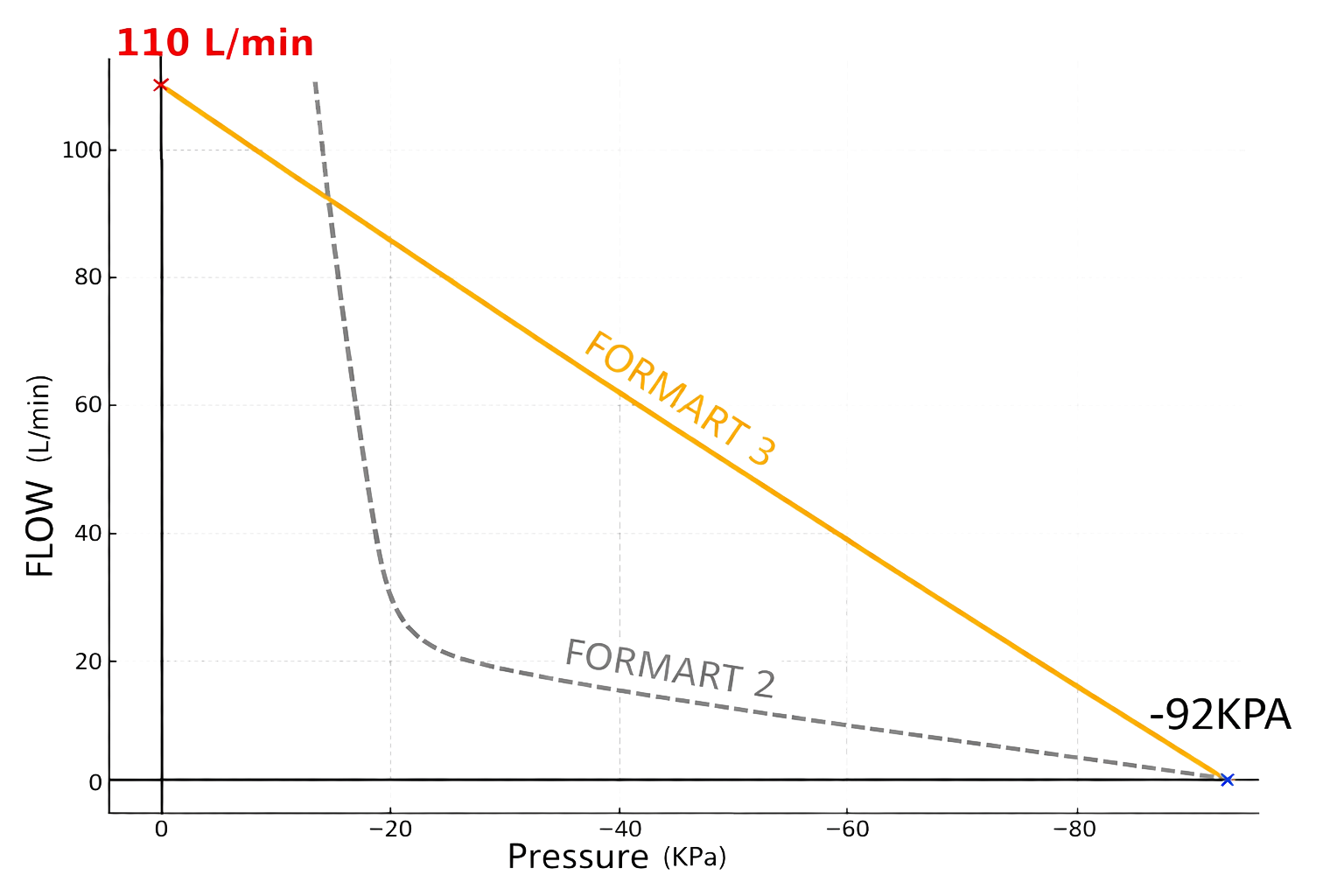
The issue is that by the time the system reaches the higher-vacuum region, the plastic sheet has already undergone cooling caused by the initial airflow, airflow disturbance, and contact with the mold. At this point, the material temperature and formability are already lower than they were at the start of forming, so performance can become more limited when higher vacuum is needed to reproduce finer details.
However, compared with an external vacuum cleaner system operating at only around -10 to -20 kPa, the FORMART 2 hybrid dual-pump system can still reach up to -90 kPa, providing a significant improvement in overall vacuum forming capability.
With FORMART 3, MYYARD moved to a single 300W vacuum pump. From an initial airflow of approximately 110 L/min to a maximum vacuum of -92 kPa, the system follows a continuous Pressure–Flow Curve without the dip created by the different operating regions of a hybrid dual-pump system.
So when comparing vacuum formers, it is not enough to look only at the maximum vacuum level. It is also important to understand how the vacuum system moves from high airflow to high vacuum within the limited time that the plastic sheet remains formable.
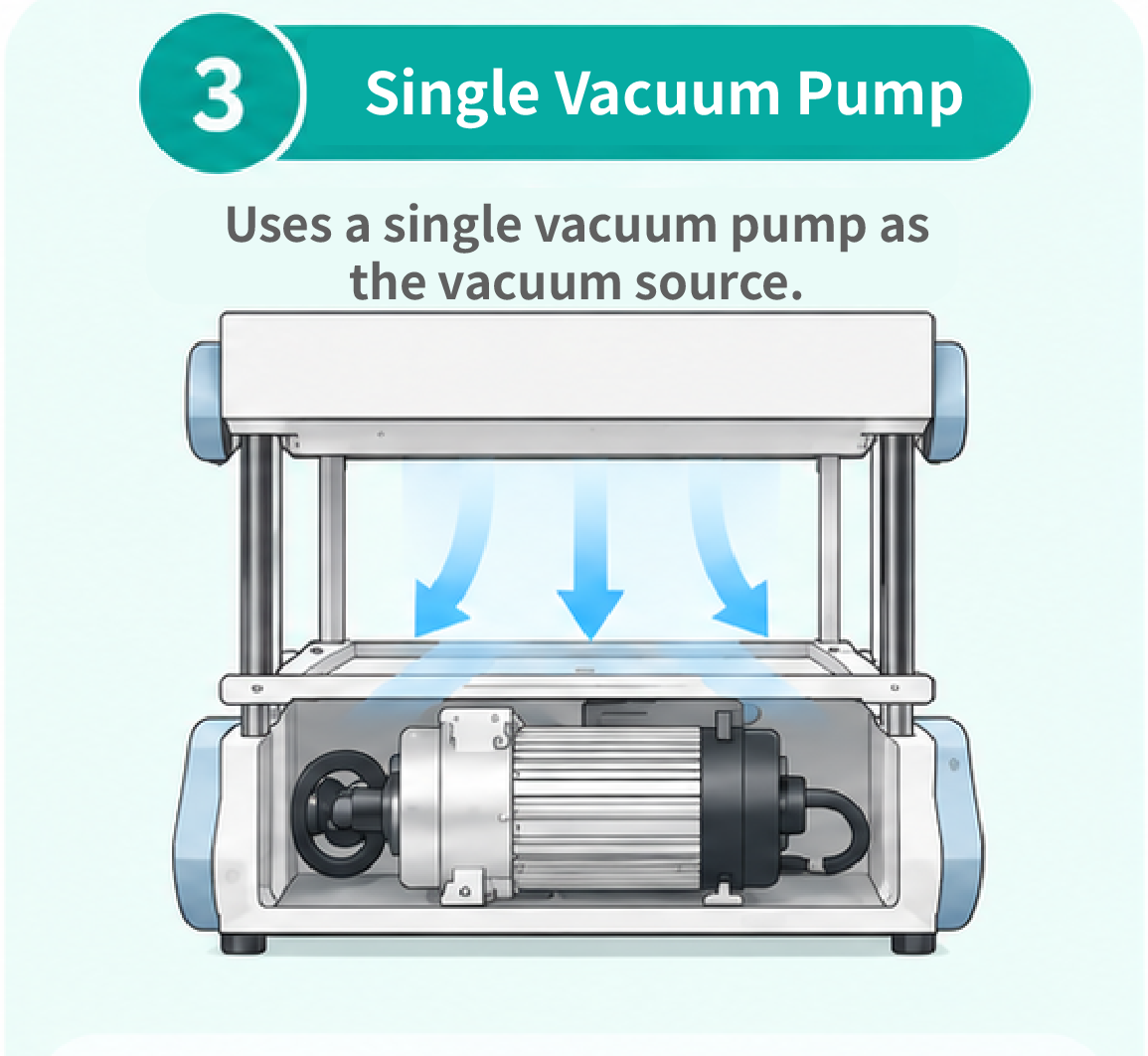
Why did FORMART 3 switch to a single 300W vacuum pump?
FORMART 3 replaces the hybrid dual-pump system used in FORMART 2 with a single 300W vacuum pump. Maximum vacuum increases from -90 kPa to -92 kPa, while the Pressure–Flow Curve changes from a curve with a noticeable dip to a single continuous slope.
| Comparison | FORMART 2 | FORMART 3 |
|---|---|---|
| Vacuum Source | Hybrid dual-pump system | Single vacuum pump |
| Pump Configuration | DC Brushless Pump + AC Induction Vacuum Pump | 300W Vacuum Pump |
| Maximum Vacuum | -90 kPa | -92 kPa |
| Pressure–Flow Curve | Noticeable dip | Single continuous slope |
Looking only at maximum vacuum level, the difference is only about 2 kPa.
However, the complete Pressure–Flow Curve shows that the two vacuum system architectures behave differently.
This is why the FORMART 3 upgrade should not be understood simply as an increase from -90 kPa to -92 kPa.
Another major change is the move from a hybrid dual-pump system to a single 300W vacuum pump.
Why should you not compare vacuum formers by maximum vacuum level alone?
Because maximum vacuum is only one part of vacuum system performance. The Pressure–Flow Curve also shows how airflow changes as vacuum level increases.
Take FORMART 2 and FORMART 3 as examples:
FORMART 2 reaches up to -90 kPa, while FORMART 3 reaches up to -92 kPa.
If we only look at these two numbers, the difference appears relatively small.
But once the Pressure–Flow Curve is included, another difference becomes clear:
FORMART 2: Hybrid dual-pump system with a noticeable dip in the curve
FORMART 3: Single vacuum pump with a single continuous slope
So when comparing commercially available vacuum formers, it is useful to look beyond maximum vacuum level and consider both the vacuum source architecture and the complete Pressure–Flow Curve.
What is the difference between an external vacuum cleaner, a hybrid pump system, and a single vacuum pump?
| Comparison | External Vacuum Cleaner | Hybrid Pump System | Single Vacuum Pump |
|---|---|---|---|
| MYYARD Example | FORMART Lite | FORMART 2 | FORMART S / FORMART 3 |
| Vacuum Source Location | External | Built-in | Built-in |
| Tested / Rated Vacuum Level | Approx. -10 to -20 kPa | FORMART 2: Up to -90 kPa | FORMART S: Up to -90 kPa; FORMART 3: Up to -92 kPa |
| Pump Configuration | External vacuum cleaner | DC Brushless Pump + AC Induction Vacuum Pump | Single vacuum pump |
| Pressure–Flow Curve | — | FORMART 2 has a noticeable dip | FORMART 3 follows a single continuous slope |
| External Vacuum Cleaner Required? | Yes | No | No |
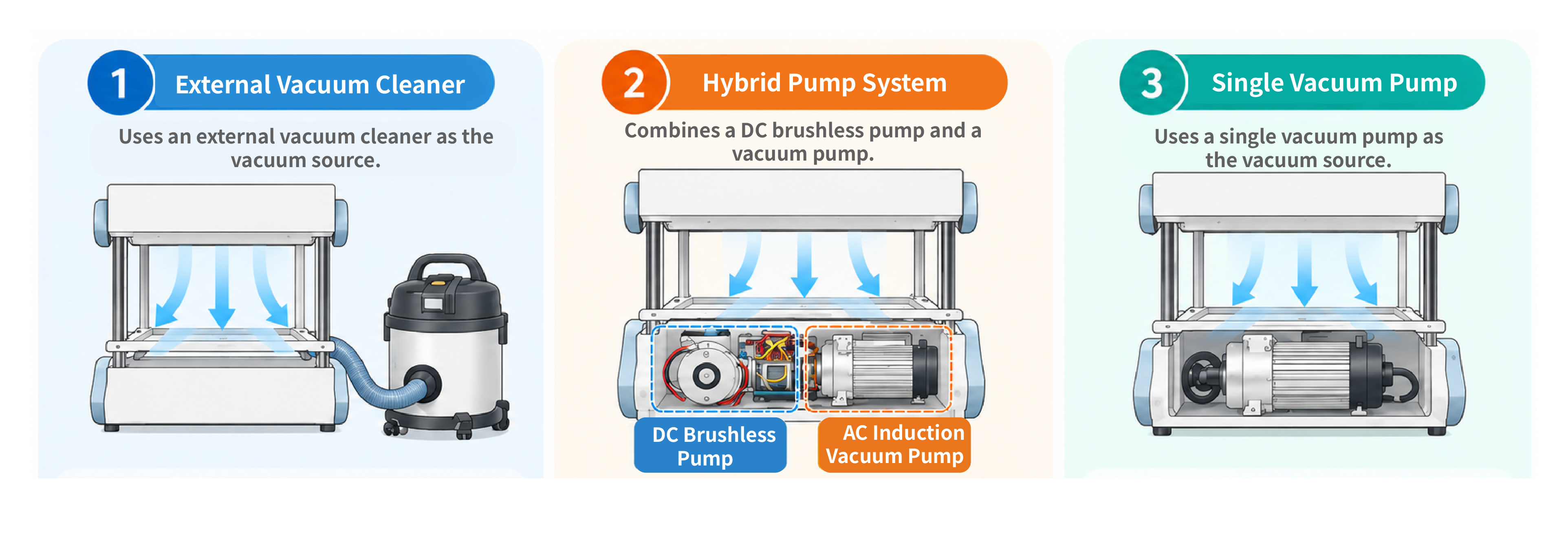
MYYARD’s product development can also be viewed through two clear vacuum system transitions:
- FORMART Lite → FORMART S
- External vacuum cleaner → Built-in single vacuum pump
- Approx. -10 to -20 kPa → Up to -90 kPa
- FORMART 2 → FORMART 3
- Hybrid dual-pump system → Single 300W vacuum pump
- Up to -90 kPa → Up to -92 kPa
- Curve with a noticeable dip → Single continuous slope
How should you choose between an external vacuum cleaner, a hybrid pump system, and a single vacuum pump?
If you are simply getting started with vacuum forming and do not need a higher vacuum level, a machine that uses an external vacuum cleaner may be sufficient. If you want the machine itself to provide a higher vacuum level, a model with a built-in vacuum pump is the better choice. When comparing hybrid and single-pump systems, it is also important to look beyond maximum vacuum level and examine how the Pressure–Flow Curve changes throughout the forming process.
| Vacuum Source Design | Best Suited For | What to Consider |
|---|---|---|
| External Vacuum Cleaner | Entry-level use and basic vacuum forming | Requires a separate vacuum cleaner; MYYARD’s previous tests measured approximately -10 to -20 kPa |
| Hybrid Pump System | Users who want a built-in vacuum source without an external vacuum cleaner | Do not compare only maximum vacuum level; also consider the Pressure–Flow Curve created by different pump operating regions |
| Single Vacuum Pump | Users who want a built-in vacuum source and care about performance from initial airflow through the high-vacuum region | In addition to maximum vacuum level, compare whether the Pressure–Flow Curve remains continuous as vacuum increases |
Is an external vacuum cleaner enough for entry-level vacuum forming?
If your main goal is to get started with vacuum forming and you do not require a higher vacuum level, an external vacuum cleaner can be used as the vacuum source.
MYYARD’s previous FORMART Lite used an external vacuum cleaner, with tested vacuum levels of approximately -10 to -20 kPa. Because this type of machine requires a separate vacuum cleaner, it is important to check whether a vacuum source is included before purchasing.
When should you choose a vacuum former with a built-in vacuum pump?
If you want the machine itself to generate a higher vacuum level without requiring a separate vacuum cleaner, choose a vacuum former with a built-in vacuum pump.
For example, FORMART S uses a built-in single vacuum pump and reaches up to -90 kPa, while FORMART 3 uses a single 300W vacuum pump and reaches up to -92 kPa.
This means that whether a machine requires an external vacuum cleaner can be used as the first selection criterion. Once you have decided on a built-in vacuum source, you can then compare pump architecture and Pressure–Flow Curve characteristics.
Should you choose a hybrid pump system or a single vacuum pump?
If two machines have similar maximum vacuum levels, kPa and pump count alone are not enough. The Pressure–Flow Curve should also be compared.
For example, FORMART 2 uses a hybrid dual-pump system consisting of a DC brushless pump and an AC induction vacuum pump, reaching up to -90 kPa. FORMART 3 uses a single 300W vacuum pump and reaches up to -92 kPa.
Although their maximum vacuum levels are relatively close, MYYARD’s Pressure–Flow Curve data shows that FORMART 2 has a noticeable change in slope between different operating regions, while FORMART 3 follows a continuous single slope from an initial airflow of approximately 110 L/min to a maximum vacuum of -92 kPa.
During vacuum forming, the plastic sheet continues to lose heat as air is removed and the sheet contacts the mold. Therefore, when comparing built-in vacuum systems, it is important to consider not only how low the final vacuum can go, but also how airflow changes from the start of evacuation to the high-vacuum region.
How do you choose a vacuum source for a vacuum former? Start with your needs, then compare vacuum level and the Pressure–Flow Curve
In simple terms, if you are just getting started and do not need a higher vacuum level, an external vacuum cleaner may be sufficient. If you want a machine that does not require external equipment and can reach a higher vacuum level, choose a model with a built-in vacuum pump. If both machines use built-in vacuum sources, compare the Pressure–Flow Curve of hybrid and single-pump systems instead of looking only at pump count.
MYYARD moved from the external vacuum cleaner used by FORMART Lite to the built-in single vacuum pump used by FORMART S. It also evolved from the hybrid dual-pump system in FORMART 2 to the single 300W vacuum pump in FORMART 3. These different architectures allow us to compare how each vacuum source builds vacuum throughout the forming process using actual machines and Pressure–Flow Curve data.
When choosing a vacuum former, you can therefore check three things in order: whether the machine requires an external vacuum cleaner, its maximum vacuum level, and how its Pressure–Flow Curve changes from initial evacuation to the high-vacuum region.
-
 Featured
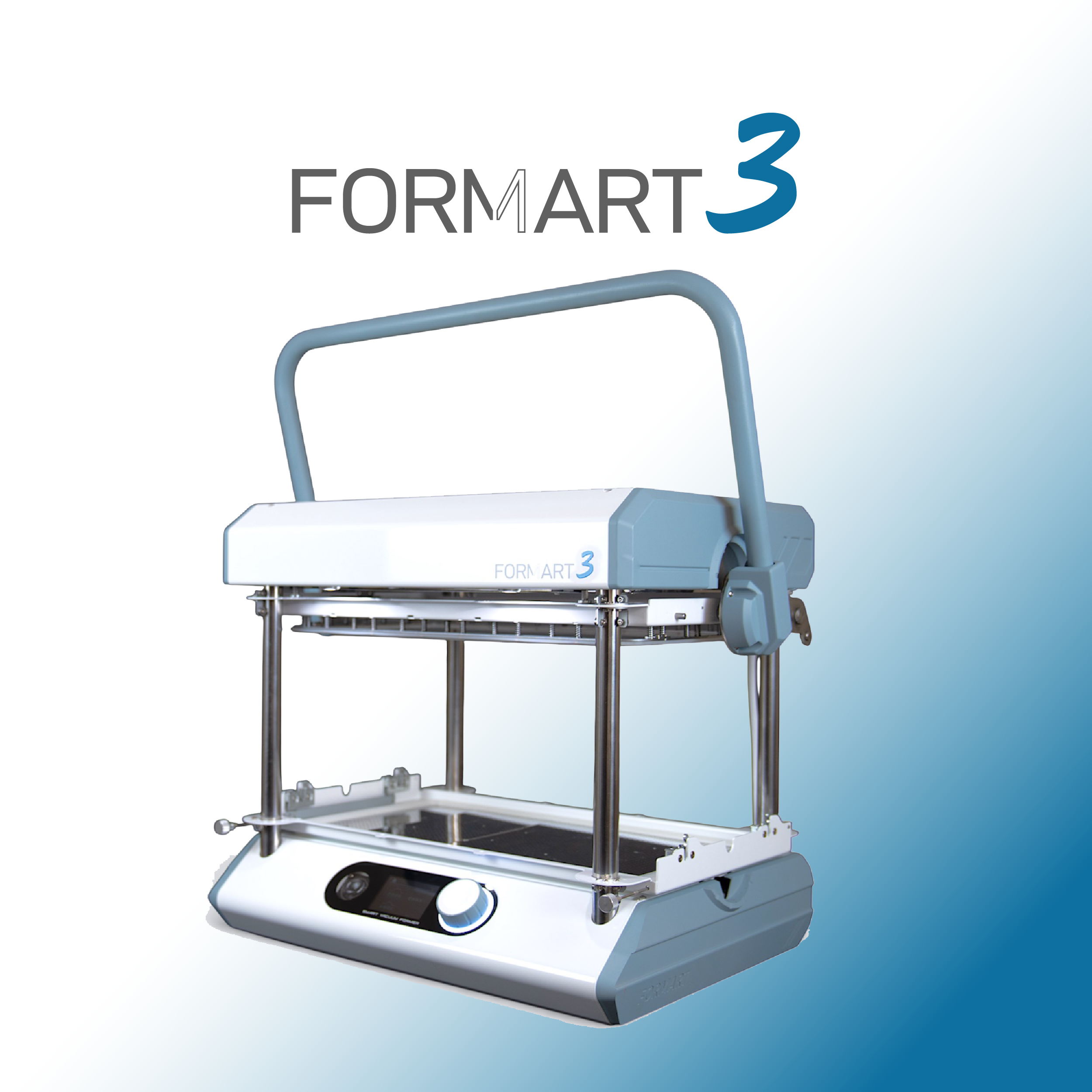
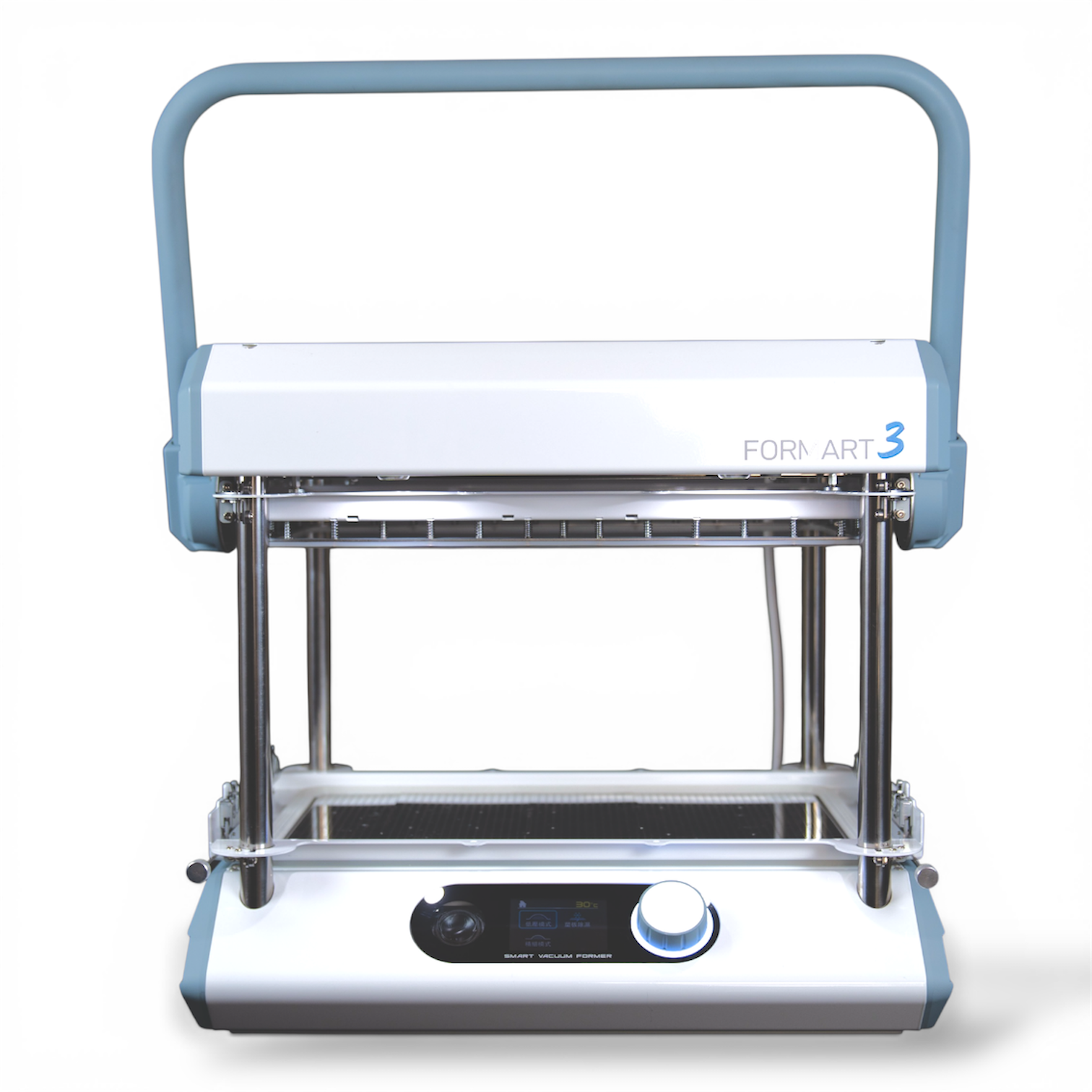
FORMART 3 新一代 智慧真空成型機|四種尺寸 自由切換
NT$59,800 Select options This product has multiple variants. The options may be chosen on the product pageFORMART 3 新一代 智慧真空成型機|四種尺寸 自由切換
NT$59,800 Select options This product has multiple variants. The options may be chosen on the product page
-
Featured
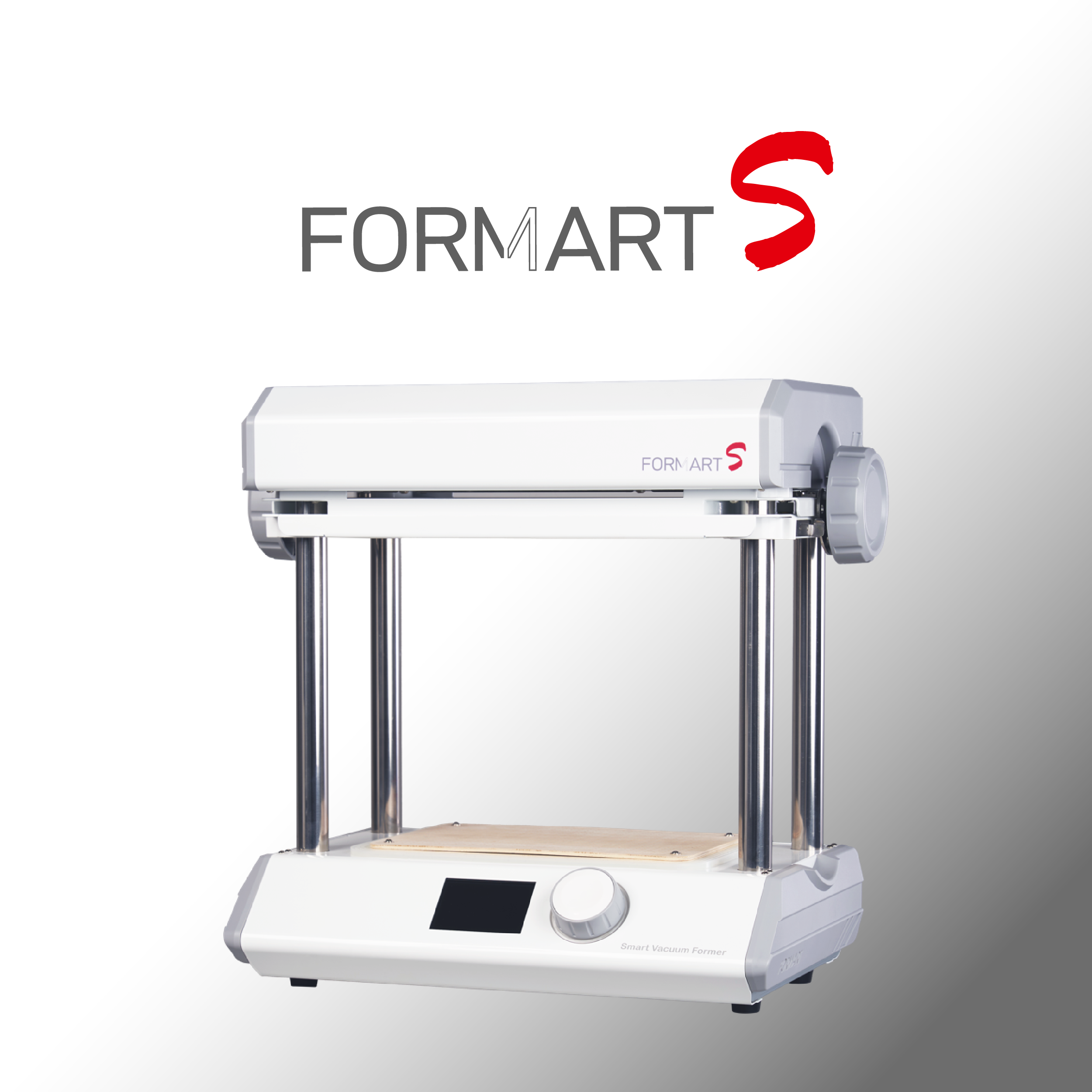
FORMART S Smart Vacuum Former
NT$28,900 Select options This product has multiple variants. The options may be chosen on the product pageFORMART S Smart Vacuum Former
NT$28,900 Select options This product has multiple variants. The options may be chosen on the product page

No Comments