
Can UV-Printed Plastic Sheets Be Vacuum Formed? A PET Forming Case Study
UV printing can apply text, graphics, and color directly to the surface of a plastic sheet. But what happens when the finished product also needs a three-dimensional shape? Can a plastic sheet be vacuum formed after it has been UV printed?
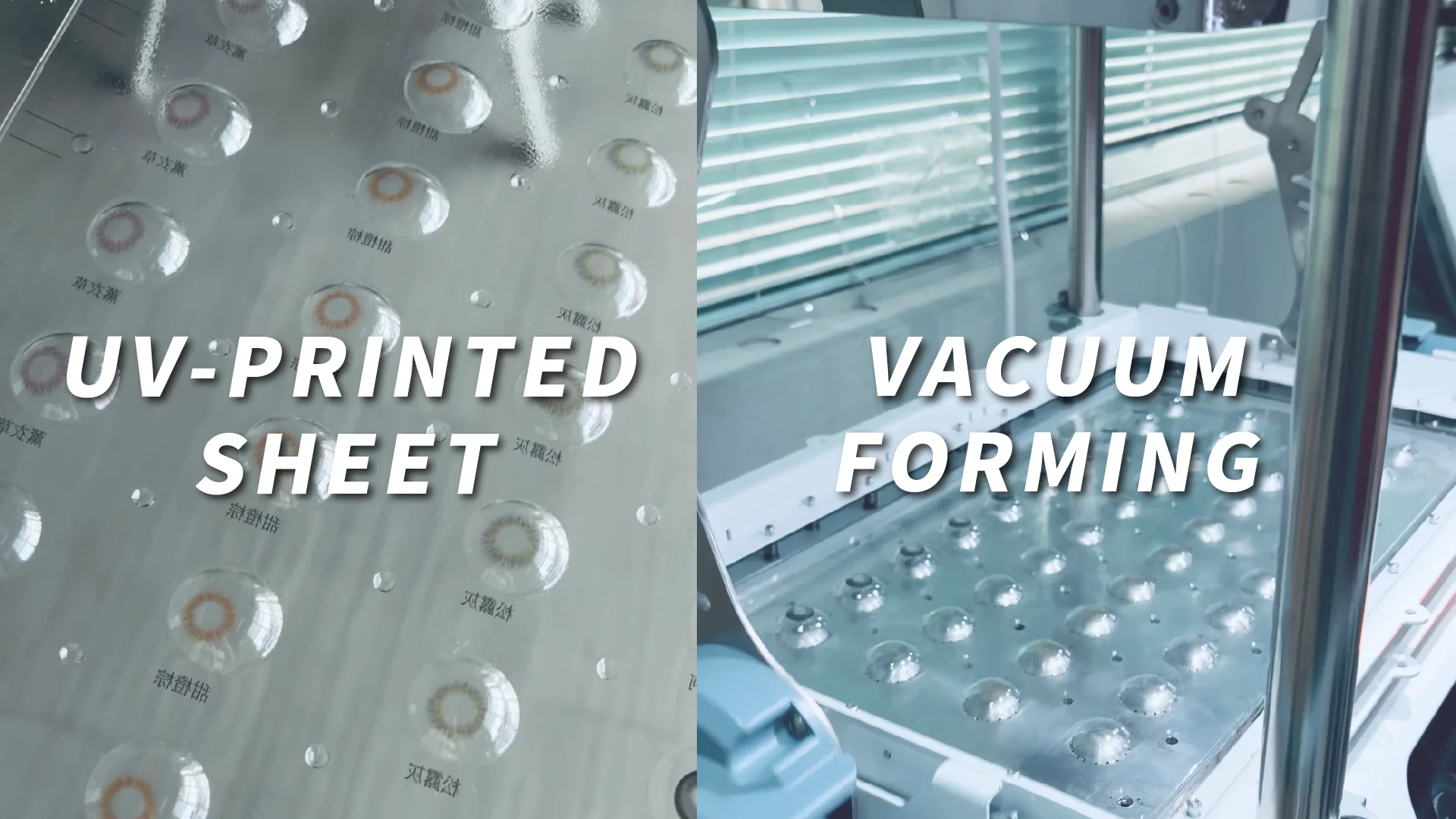
MYYARD recently tested this in a customer project. The customer wanted to make a display tray for contact lens products and brought in a PET sheet that had already been UV printed. They wanted to see how the printed sheet would look after vacuum forming. We tested it with a FORMART 3 smart vacuum former and a precision aluminum mold.
After heating and vacuum forming, the PET sheet conformed to the mold. The graphics, originally printed on a flat surface, stretched with the sheet and followed the three-dimensional contours of the tray.
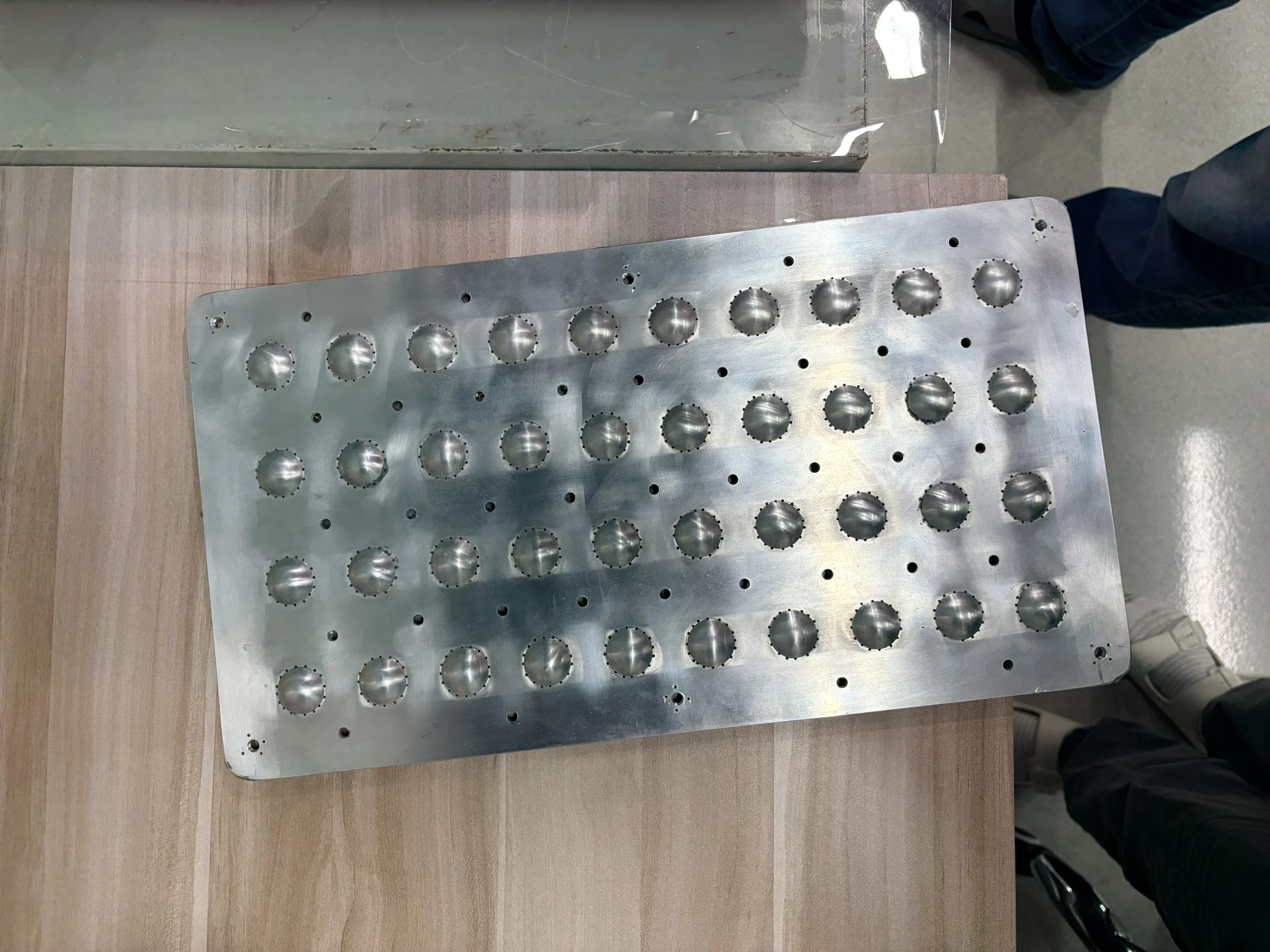
The customer's aluminum mold for the display tray
Related reading: Vacuum Forming Not Reaching the Details? Check the Mold Temperature
UV Print First, Then Vacuum Form
In conventional vacuum forming, a thermoplastic sheet is heated until it can be shaped, then vacuum pressure draws it against a mold.
In this project, the PET sheet was UV printed before forming:
PET sheet → UV printing → Heating → Vacuum forming → Finished part
With this approach, the printed design stays on the sheet as the sheet takes shape. For products that combine graphics with a three-dimensional structure, it may reduce the need to apply artwork after forming.
That is how the customer turned a flat, UV-printed PET sheet into a three-dimensional display tray for contact lens products.
For a closer look at the journey from tray design and prototyping to production, see our custom tray development case study.
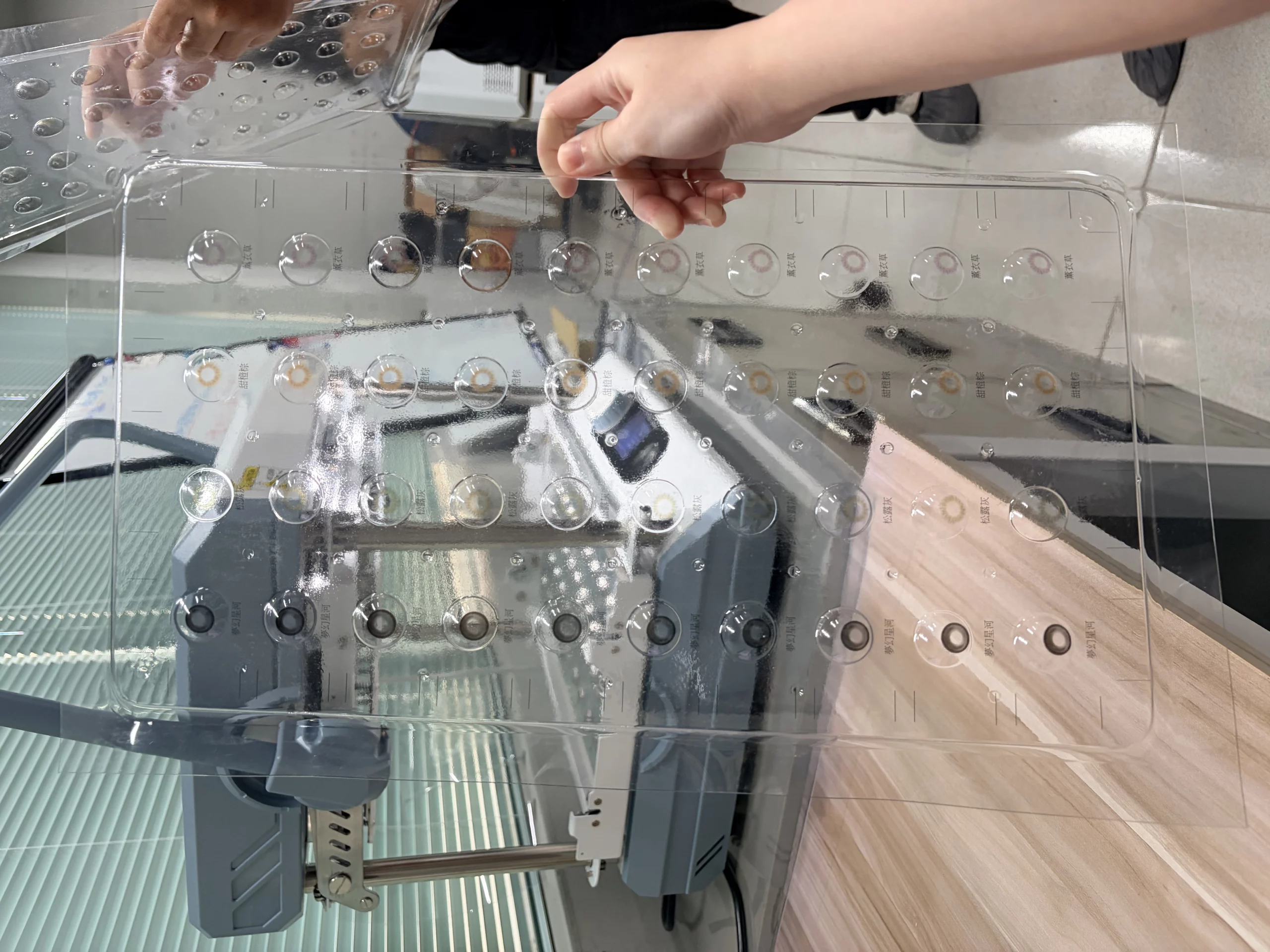
Printed Graphics Stretch During Vacuum Forming
During vacuum forming, different areas of the PET sheet stretch by different amounts depending on the mold's height, depth, and shape. The UV-printed graphics on its surface stretch along with the sheet.
In the finished tray, the design that was printed on flat PET follows the tray's three-dimensional contours.
This change needs to be considered during product design.
Some stretching may be acceptable for decorative patterns. For logos, text, circles, or graphics that must land in a precise position, the design needs to account for changes in placement and proportions after forming.
Watch FORMART 3 Form the Printed PET Sheet
The video shows the UV-printed PET sheet being formed with the FORMART 3 and aluminum mold.
What Should You Check Before Forming a UV-Printed Sheet?
This test showed that the PET sheet could be vacuum formed under the specific UV-printing and forming conditions used here. Results may differ with other materials or printing conditions.
The UV ink is heated and stretched along with the sheet. A deeper mold can produce greater stretching in some areas. The result depends on the plastic, UV ink, printing method, mold geometry, and forming settings.
Before using this process for a production item, test with the actual sheet, print method, and mold. Then adjust the artwork's position and size based on the formed result. You can also review the PET sheet specifications before testing.
Where Could This Process Be Used?
Printing before vacuum forming may work for products that combine flat graphics with three-dimensional plastic shapes, such as display trays, packaging inserts, blister packaging, product displays, and other custom formed parts.
During product development, a forming test can show how far the printed design stretches. The artwork and mold design can then be refined before production.

No Comments