
How Do You Make an AI Figure? From Photo to FORMART Blister Packaging
To make an AI character figure, start with reference photos, generate a character image, turn it into a 3D model, then print and finish the figure. Finally, use a FORMART vacuum former to make a blister shell and add a backing card. This guide covers the four steps, common problems, and draft-angle techniques.
Workflow at a glance: Prepare photos and choose a style → generate and inspect a 3D model → print, finish, and paint the figure → form a blister shell around it. Before forming, check protruding and recessed parts that could trap the shell.
Related: DIY blister card packaging without a mold
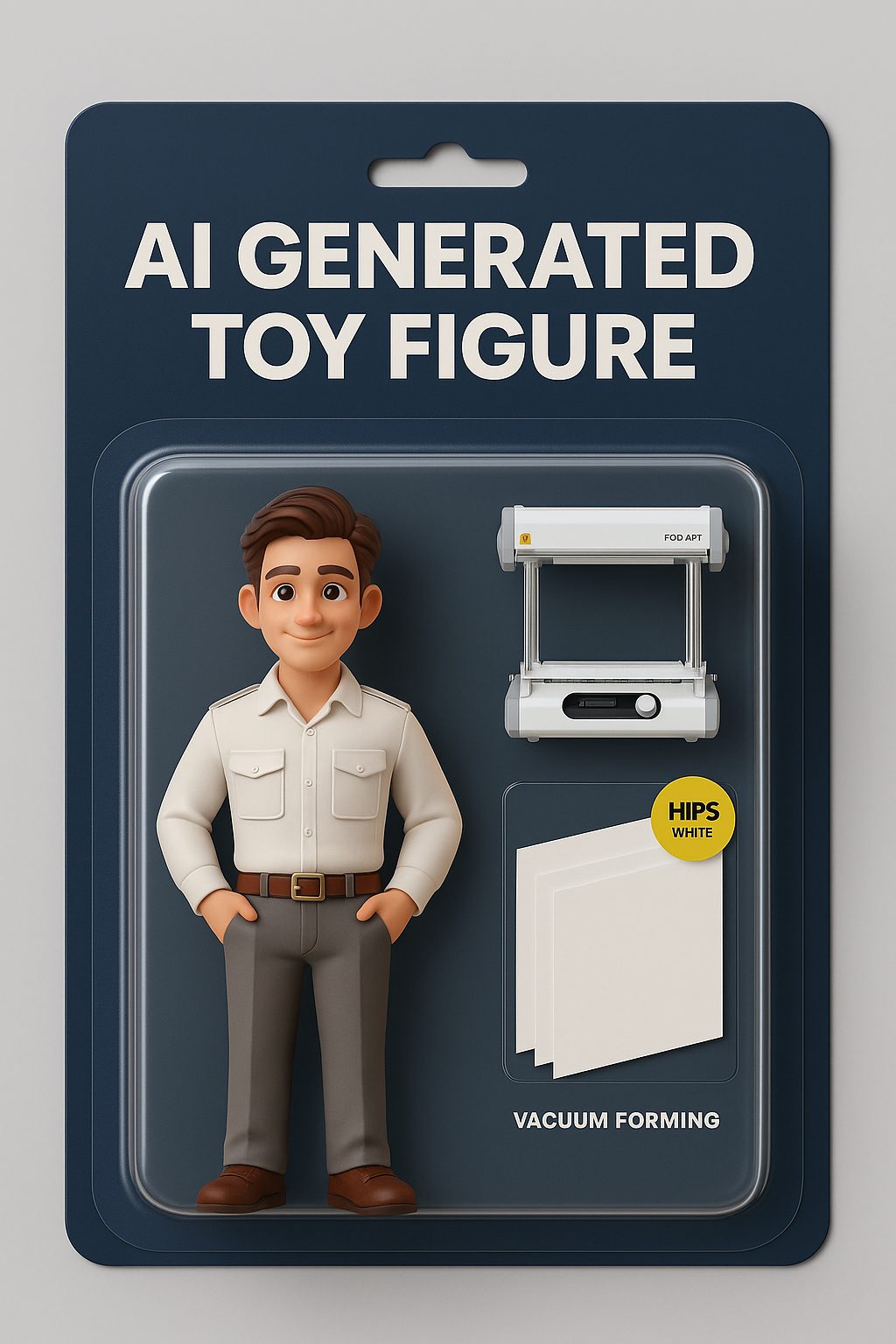
This workflow suits personal collectibles, gifts, and display samples. After finishing the figure, use a FORMART vacuum forming machine to shape a clear blister shell and pair it with a backing card. The result depends on model geometry, sheet material, and forming conditions.
How Do You Make an AI Figure? Four Steps from Photo to Packaging
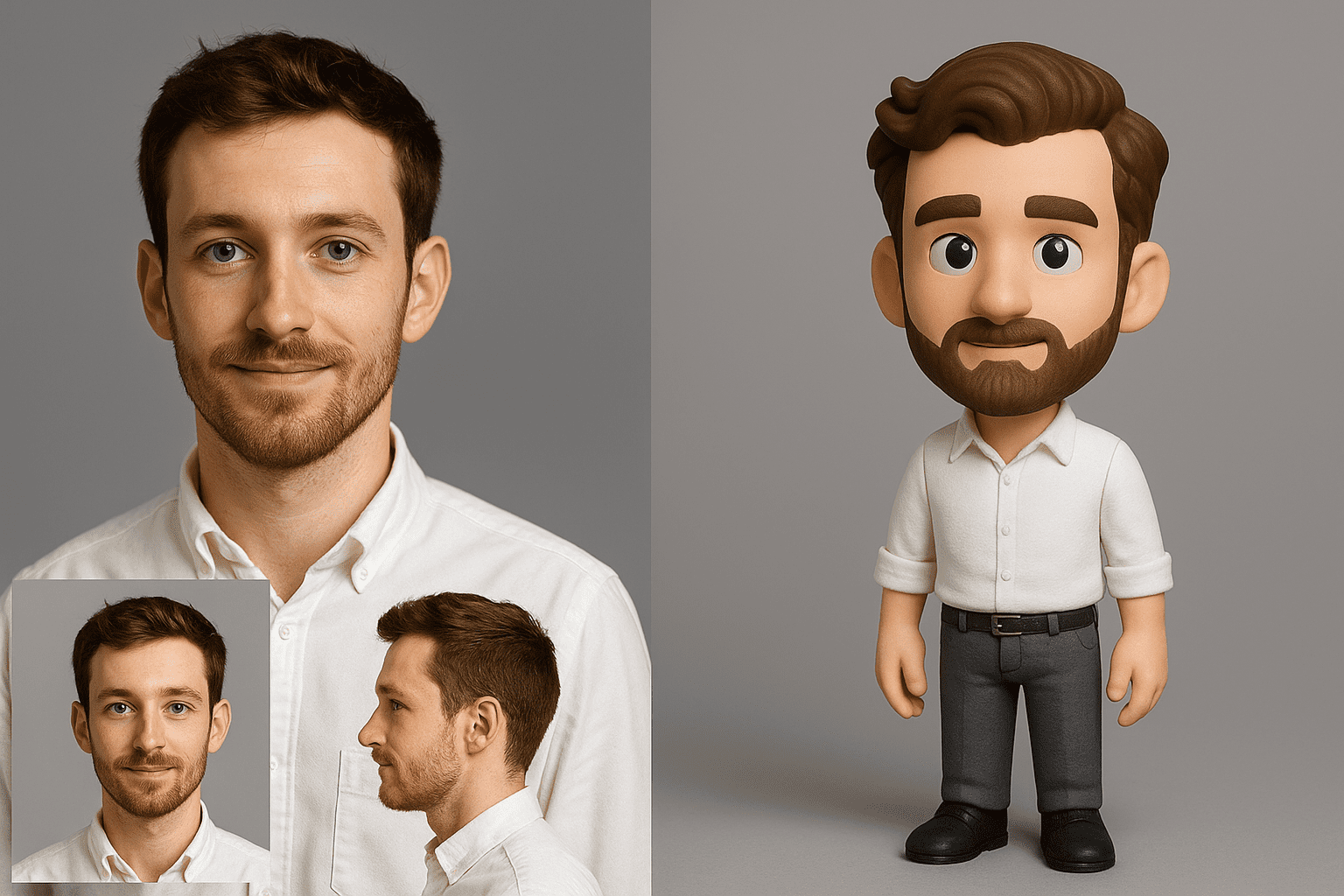
Step 1: Generate a Character Image with ChatGPT
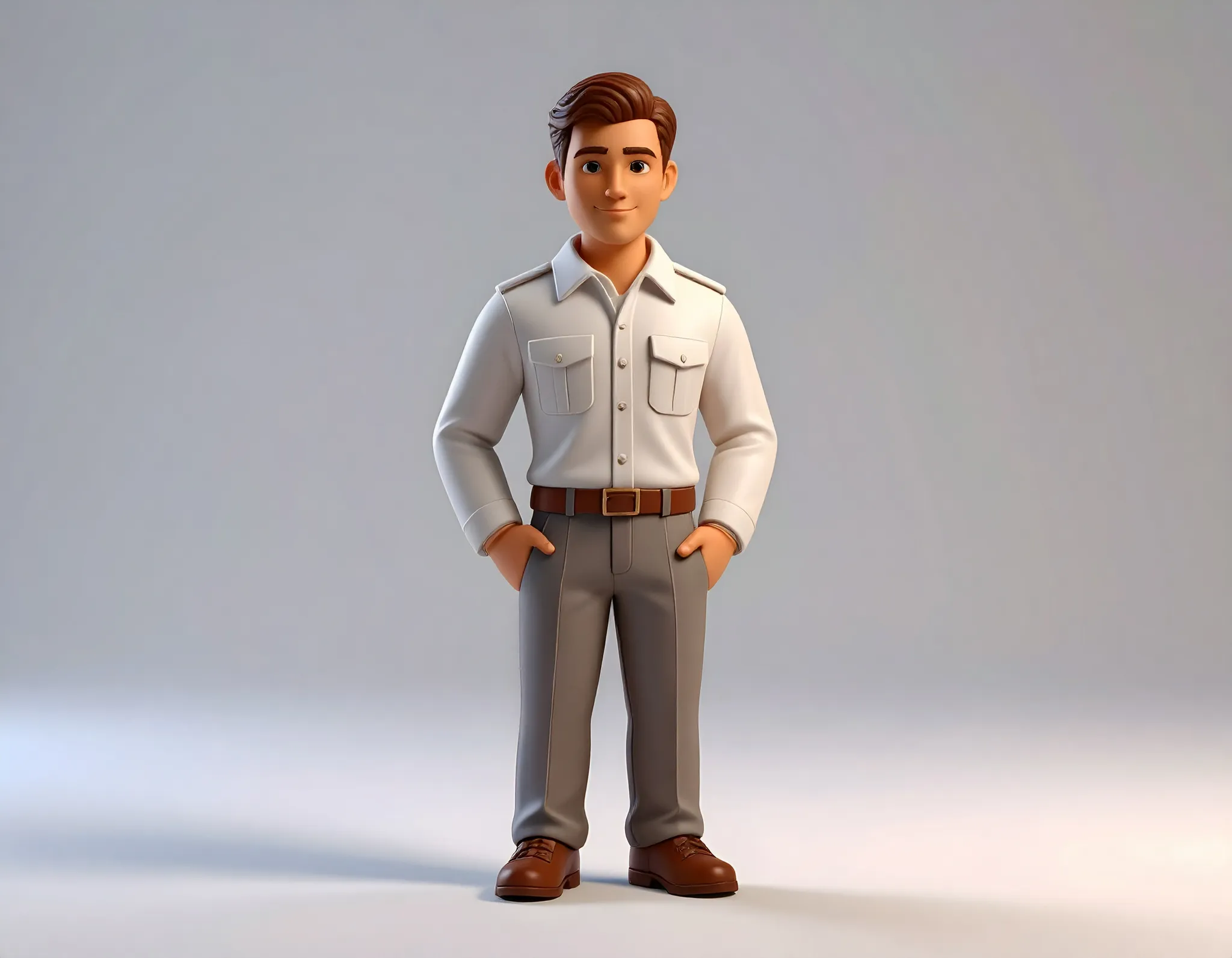
Prepare 1–3 front and side reference photos and describe the intended style in ChatGPT, such as chibi, realistic, or movie-inspired. Review facial features, pose, and symmetry before choosing an image to model.
Step 2: Turn the Image into a 3D Model with MakerWorld
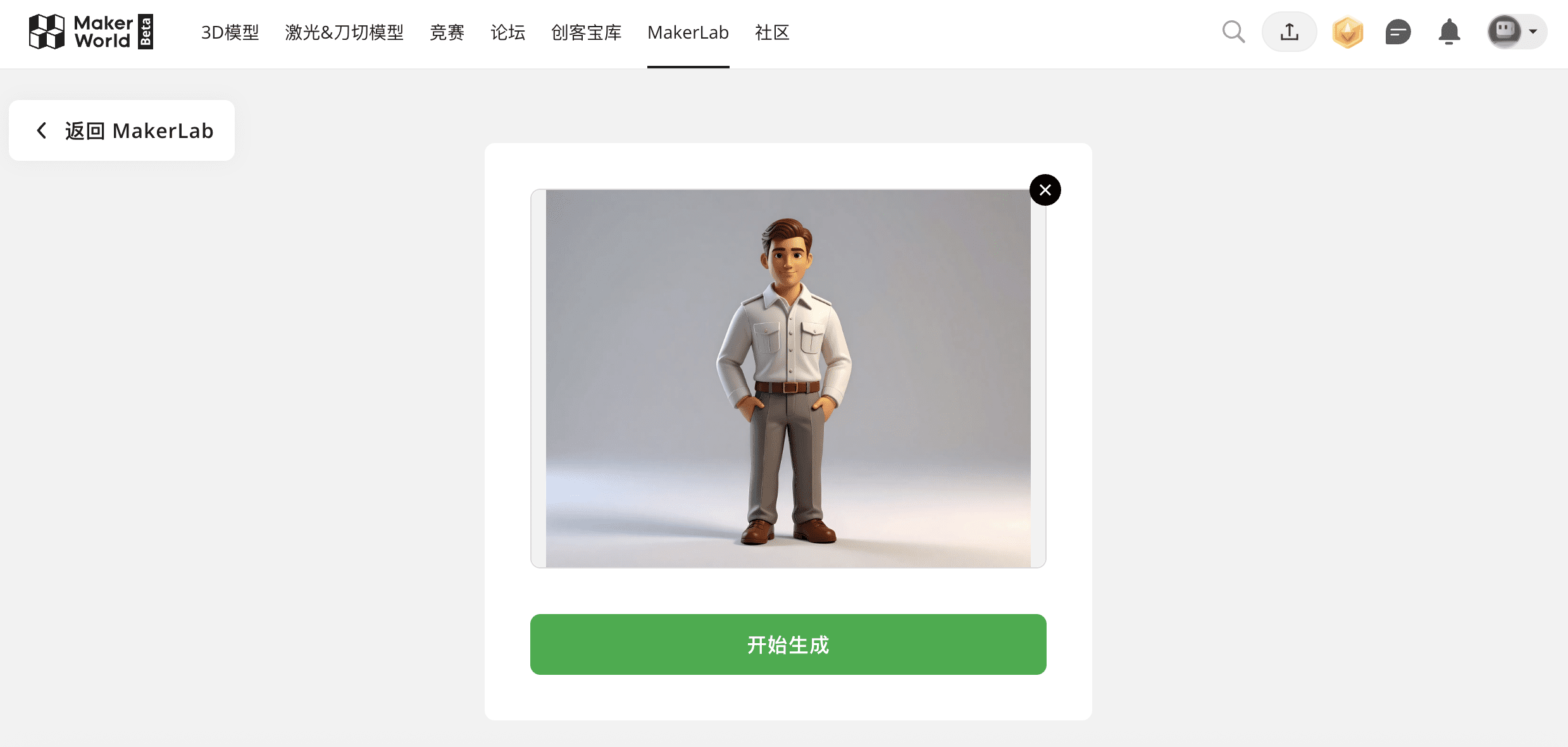
- Open MakerWorld's Image to 3D Model tool.
- Upload a clear, front-facing character image with a simple background.
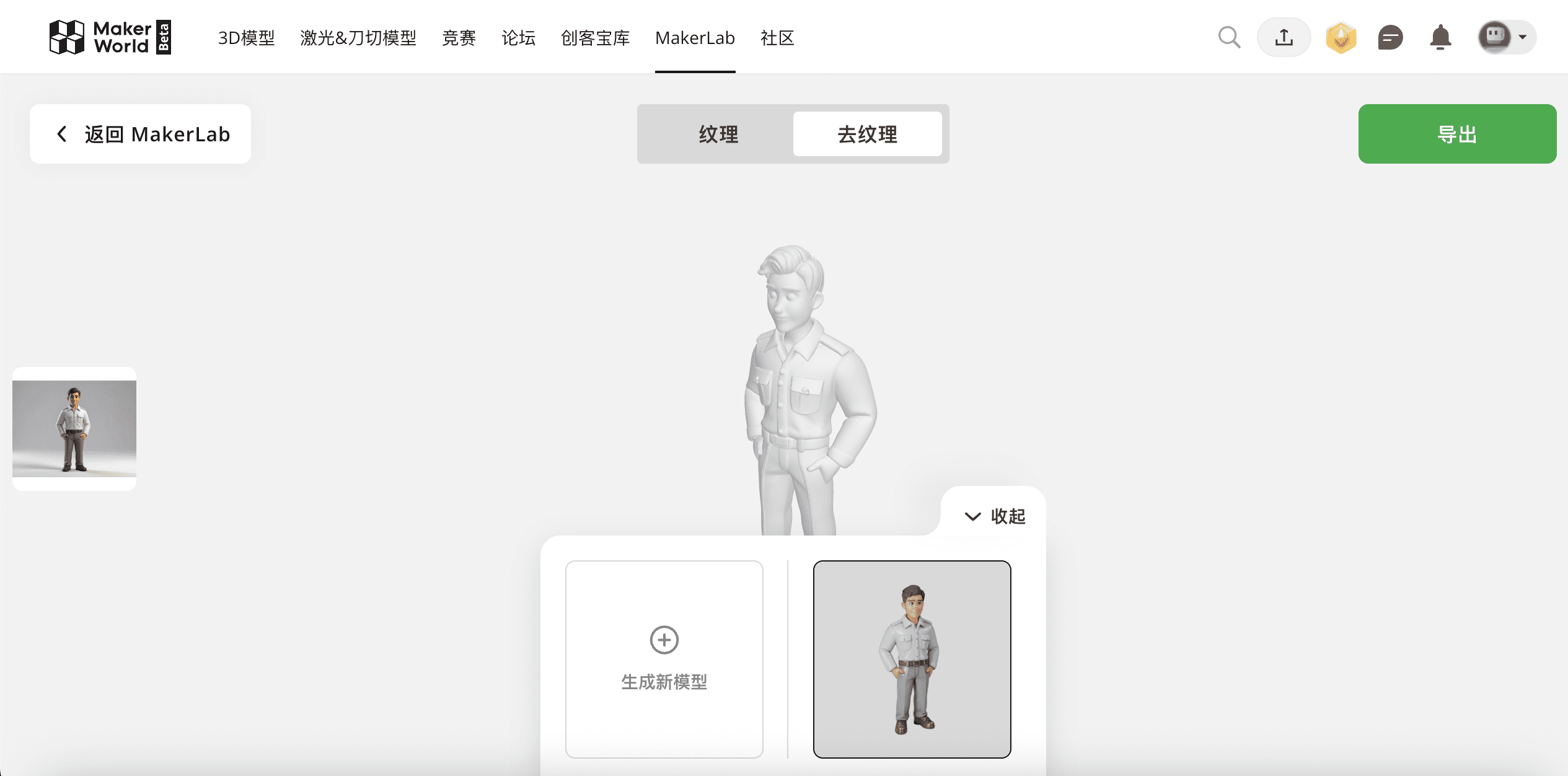
- Wait for the model to generate, preview it, and inspect the details.
- Download an available STL or 3MF model; if needed, edit it in Bambu Studio or prepare it for printing.
Check whether the model's face, hair, and protruding accessories can be printed. Adjust them in modeling or slicing software before moving to the next step if necessary.
Step 3: Print, Finish, and Paint the Figure
Use an FDM printer such as a Bambu Lab machine to print the figure. Its speed and accessible workflow make it suitable for this example; finish and paint the printed details afterward.
- Choose PLA or TPU suitable for the model. For fine details, consider a 0.2 mm nozzle and adjust the print settings to the material and model.
- After printing, remove supports and cut, sand, assemble, and paint the figure as needed.
Step 4: Make the Figure's Blister Packaging with FORMART
Use a FORMART vacuum forming machine to make the blister shell with PET or HIPS sheet.
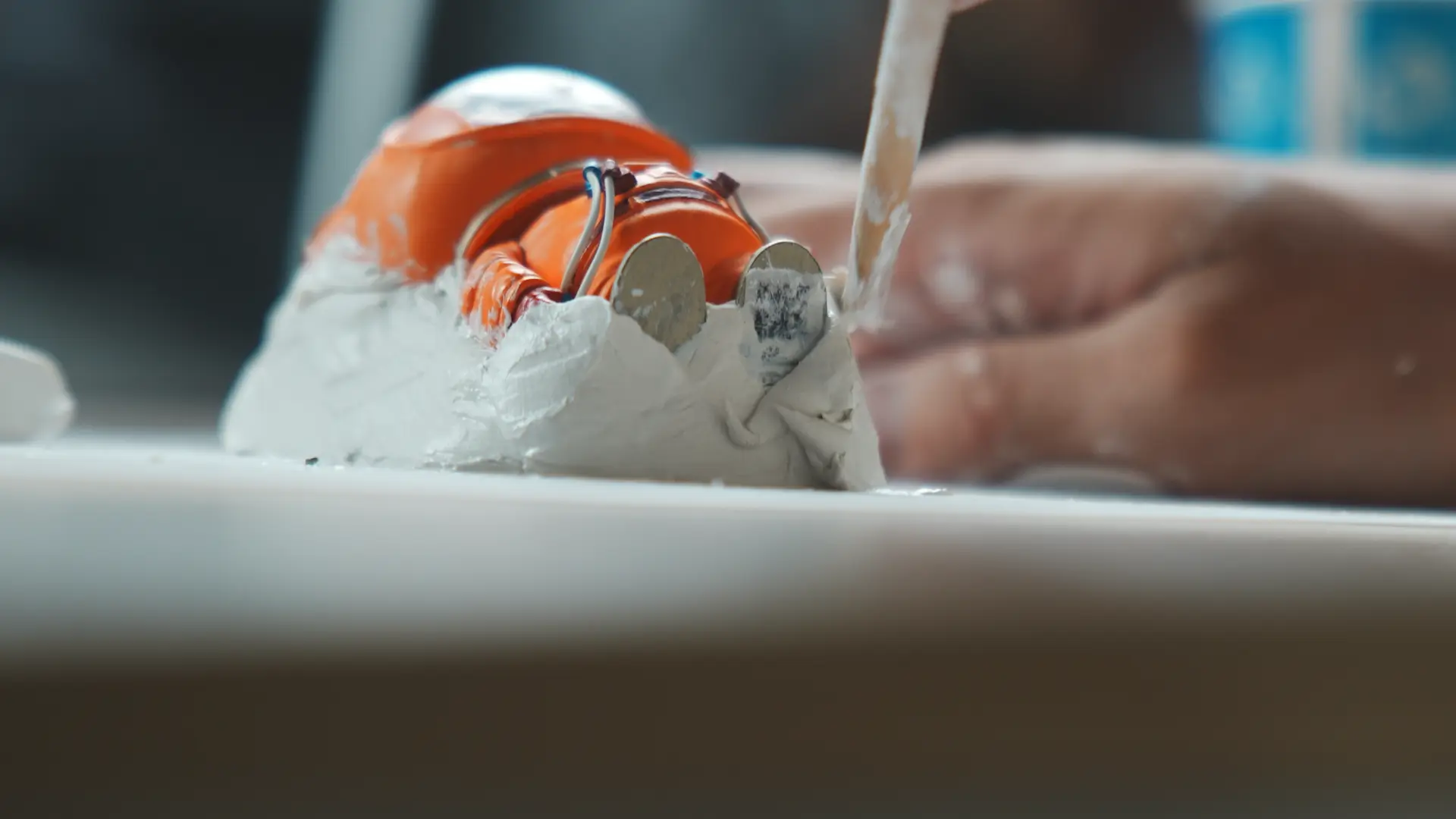
To avoid trapping the model, build a 3–5° draft angle at its edges with paper clay, or design rounded transitions.
After forming, add a backing card and a hanging hole if needed for display.
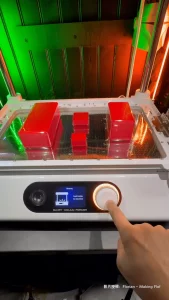

Related example: Florian makes a custom figure blister package with FORMART
What Problems Can Occur When Making an AI Figure?
| Challenge | Solution |
|---|---|
| Asymmetric AI image | If a ChatGPT-generated character sketch has uneven facial features, regenerate it or provide a clear front-facing photo and a pose description such as 'standing, facing the camera.' |
| Thin hair breaks easily | Choose a chibi-style or simplified hairstyle in MakerWorld. When preparing the print, increase the outer-wall thickness if needed so thin hair and accessories are less likely to break. |
| Painting mistakes | Use masking tape between color layers: paint the skin first, mask it, then apply hair color with an airbrush or sponge to reduce brush marks and bleeding. |
| Blister does not fit closely | For square edges or protrusions, add a 3–5° paper-clay draft angle at the base before forming. Adjust FORMART's vacuum time and heating temperature according to the actual fit. |
| Supports are hard to remove | Use automatic support detection in Bambu Studio. Curved contact areas or support density below 15% can make removal easier while helping preserve surface details. |
Why Does the Blister Fail to Fit, Tear, or Get Stuck?
- No vent holes in the model: A base that seals against the platform can trap air and prevent the heated sheet from fitting fully. Provide 0.5–1 mm vent holes at the base or in recessed areas where needed.
- Rough edges can tear the blister: Before forming, smooth the model with 800–1200 grit sandpaper and check its corners for cracks or uneven areas.
- Corners do not form completely: Preheat FORMART first. Raising the model base by 5–10 mm can bring its edges closer to the center of the heating area.
- The blister tears or sticks during demolding: For vertical walls or undercuts, add a 3–5° paper-clay draft angle. After forming, warm the shell gently and release it slowly.
- The blister sticks to the model: A release agent or diluted petroleum jelly applied before forming may make demolding easier; check compatibility with the sheet and model first.
How Do You Add a Draft Angle with Paper Clay?
A draft angle can help the blister release without tearing. Build a 3–5° slope around the base of the model with paper clay and let it dry completely before forming.
Method:
- Choose lightweight paper clay that does not crack when dry.
- Build a 3–5° slope around the outer contour of the model.
- Let the clay dry completely before forming.
- Paper clay can be applied directly to a PLA model to adjust its shape.
Tips:
- Pay particular attention to undercuts around feet, the underside of a shield, and ears.
- The shaped master can be replicated as a silicone mold for repeated use.
This approach can improve demolding without rebuilding the 3D model.
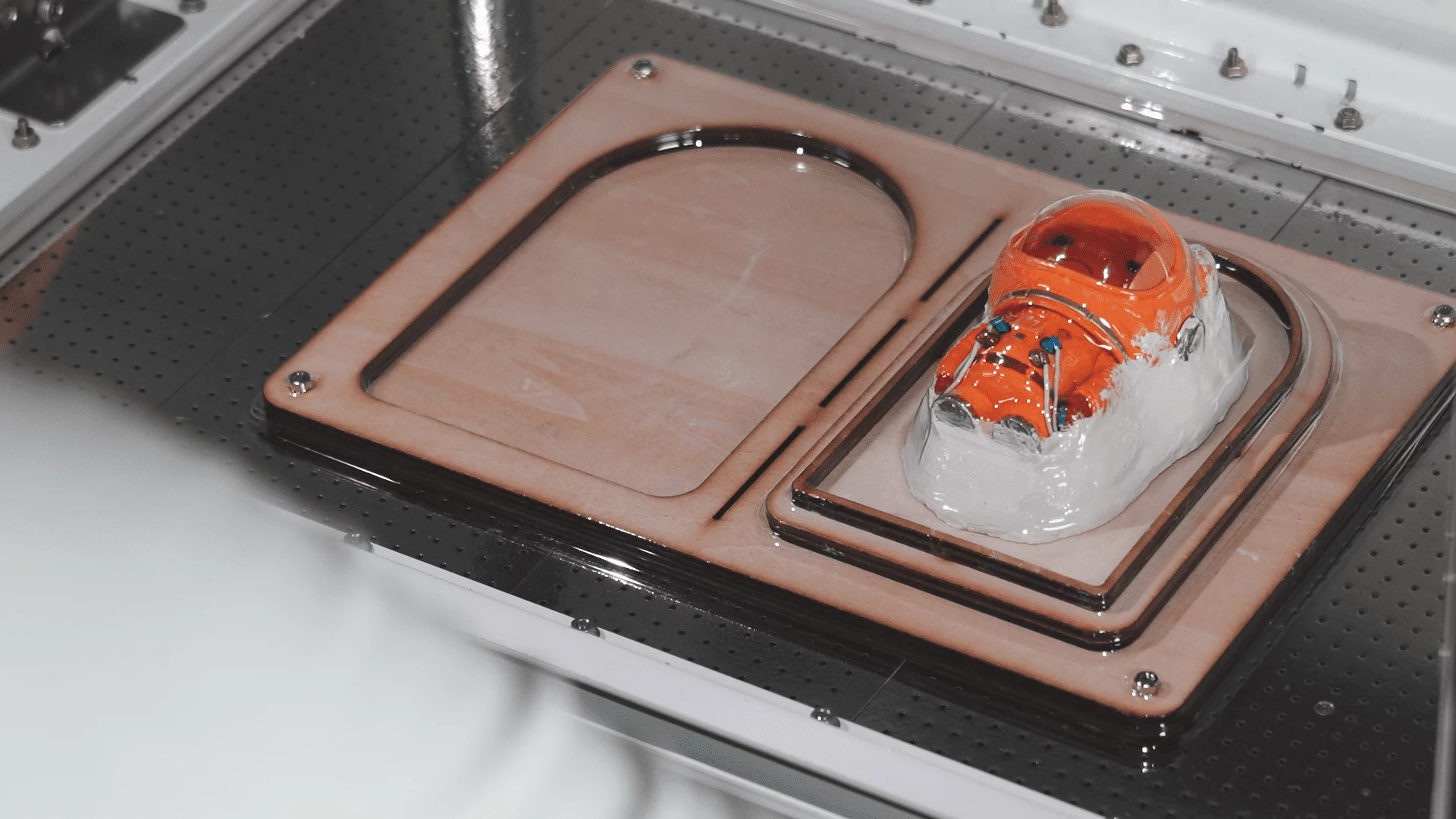

How Can Blister Packaging Improve Figure Display and Sales?
- Character profile card: Add a character introduction, brand logo, and story.
- Swappable parts: Use magnets for interchangeable expressions, hands, and accessories.
- Double-layer blister: Add protection and improve display.
- FORMART saved settings: Reuse forming parameters to keep batches consistent.
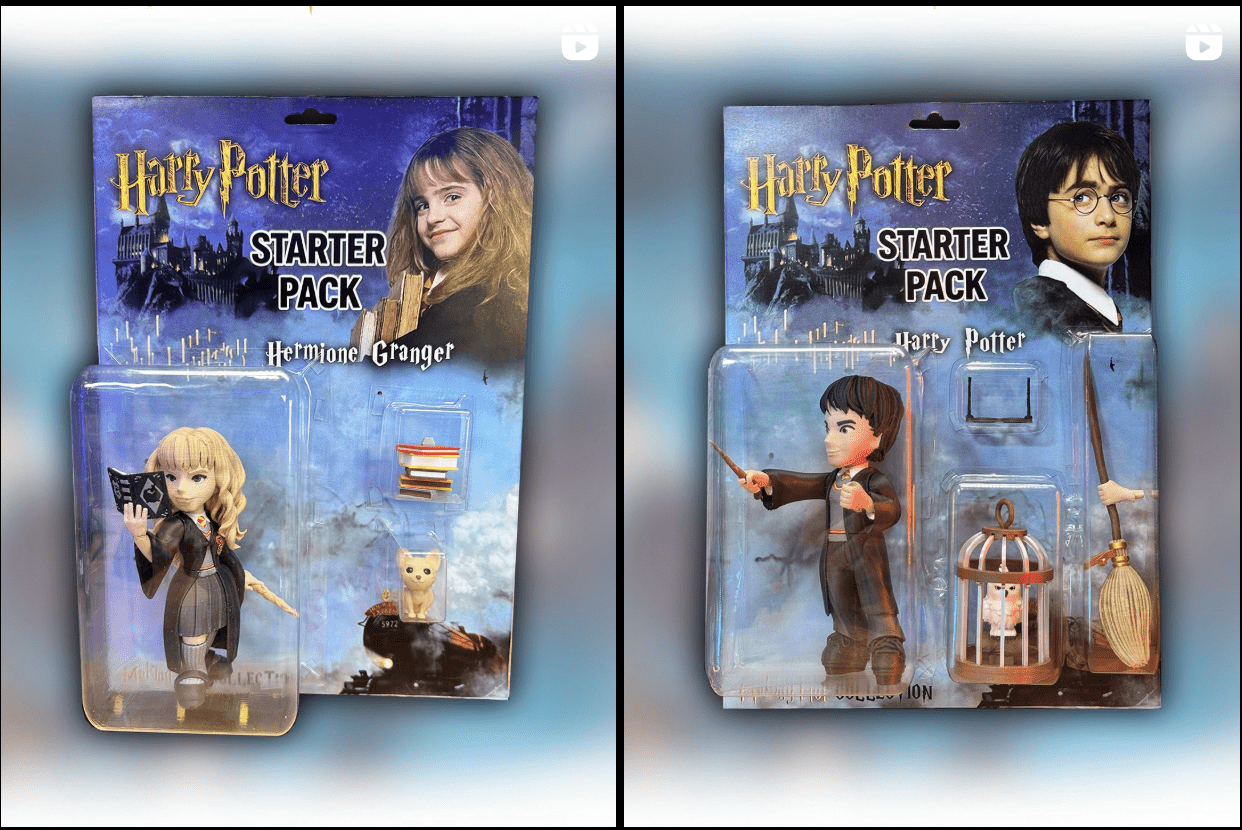
Case Study: Making Flof Harry Potter Figure Series
FORMART Blister Packaging Applications
| Application | Effect |
|---|---|
| Figure collectibles | Displays the figure fully while helping protect it from dust. |
| Creative product sales | Creates a retail-style package and a more professional brand presentation. |
| Gift packaging | Combines a name and character in a one-of-a-kind gift. |
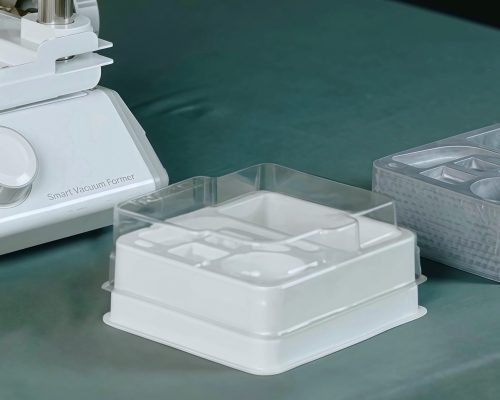
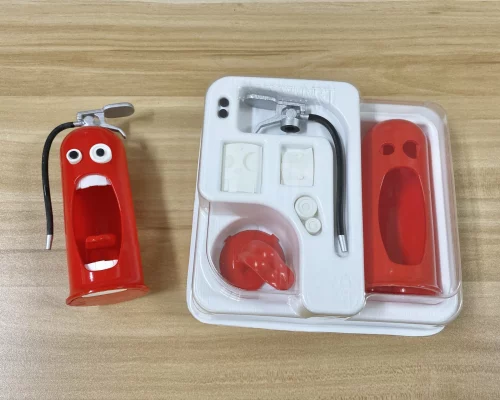
Key Takeaways: From AI Image to Packaged Figure
Start with reference photos and an AI-generated character image, then inspect the 3D model before printing and finishing it. For the FORMART blister package, pay attention to protrusions, draft angles, and shell fit; adjust the sheet and forming conditions for the actual model.
Share Your Figure and Follow Us
Did this guide give you an idea for your next figure?
Leave a comment or share the character you want to make.
Follow us for more projects and practical tutorials:

Interesting walkthrough of going from an AI character image to a physical figure. For people who only need a relief or a flat display piece rather than a full 3D figure, a heightmap approach is much simpler – I built a free tool for that (https://imagetostl.io) and it’s a good first step before trying full figure generation.
Ff